Clay masks have been used for centuries, and for good reason: they draw out excess oil and impurities, leave skin feeling fresh and smooth, and suit almost every skin type — provided you choose the right clay. The wrong one, though, can leave dry skin tight and irritated or do almost nothing for oily skin.
This guide explains what clay masks actually do, introduces the main types of clay, and shows how to match one to your skin type, apply it properly and avoid the mistakes that turn a relaxing treatment into a red, tight face. A clay mask works best as part of a steady routine, alongside the gentle daily steps in Glowing Skin Morning Skincare Routine.
Key Takeaways
- Kaolin is the gentlest clay and suits dry or sensitive skin; bentonite is the strongest and suits oily skin.
- Never let a clay mask dry completely — remove it while it is still slightly damp to avoid over-drying.
- Use a clay mask once or twice a week; more often can strip the skin barrier.
- Patch test any new mask on your jawline before applying it to your whole face.
- Follow every clay mask with moisturiser to restore hydration.
What Clay Masks Actually Do
Clay is naturally absorbent. When mixed with water and applied to the skin, it draws out excess sebum, sweat and surface impurities as it dries, and the gentle tightening sensation comes from the clay contracting as it sets. Used correctly, a clay mask can make pores look smaller, calm an oily T-zone, and leave skin feeling clean without the harshness of a strong cleanser.
What clay masks do not do is also worth knowing. They cannot permanently shrink pores, pull out blackheads from deep inside the skin, or detox the body — those claims are marketing, not science. Their real value is simpler: a weekly deep cleanse that keeps oil and buildup under control, especially for skin that gets congested easily.
Know Your Clay
Not all clays behave the same. The main differences are how strongly each one absorbs oil and how drying it is, which is what decides who it suits.
Photo via theodysseyonline.com
Kaolin: The Gentle One
Kaolin, also called white or china clay, is the mildest of the common clays. It absorbs oil gently without stripping the skin, which makes it the best choice for dry, sensitive or mature skin, and for anyone trying a clay mask for the first time. Pink kaolin is a blend of white and red clay and is similarly gentle.
Bentonite: The Strongest Absorber
Bentonite swells when mixed with water and has a strong negative charge that attracts positively charged impurities and excess oil. It is the most powerful option for very oily or congested skin, but it can be too drying for dry or sensitive skin. If you use bentonite, keep the mask time short and moisturise well afterwards.
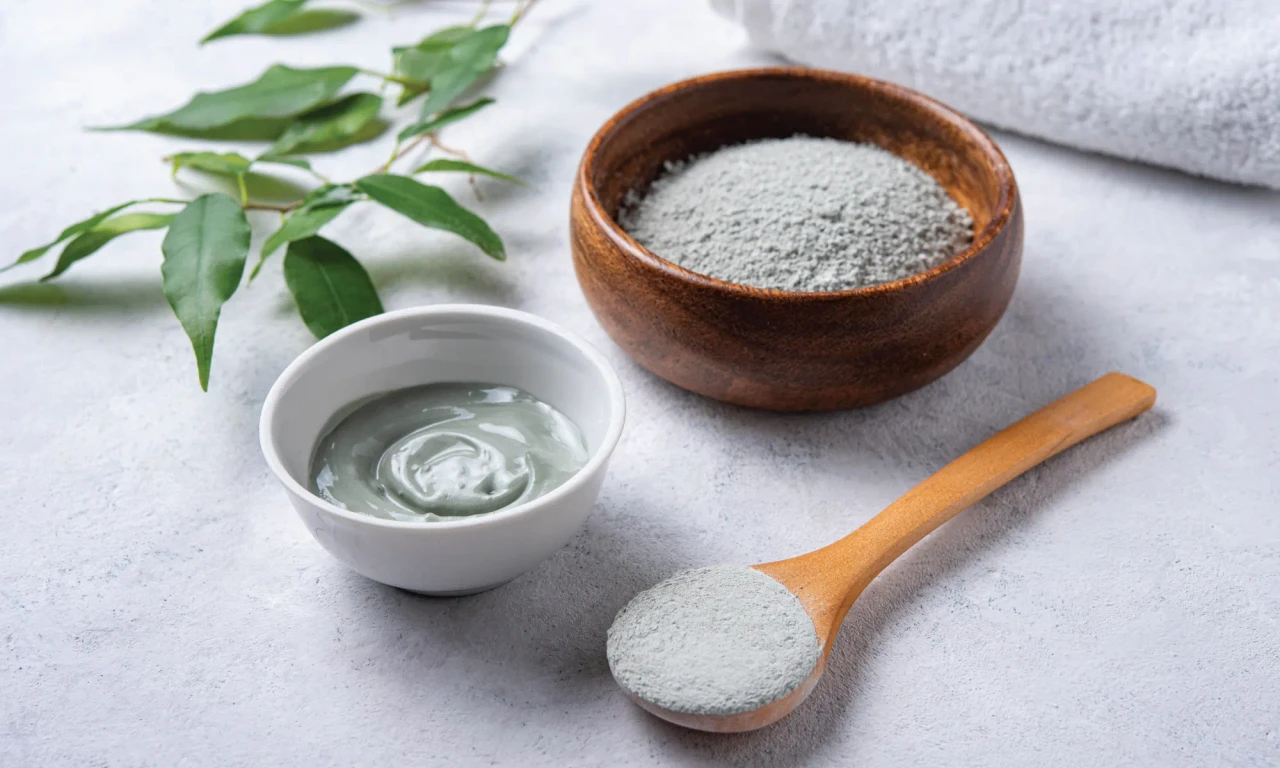
Photo via club-cleo.com
French Green Clay: The Balanced Middle
French green clay, or illite, sits between kaolin and bentonite in strength. It absorbs oil effectively and is popular for combination and normal skin. Its green colour comes from iron oxide and decomposed plant matter, which is also why it has a slightly earthy scent.
Rhassoul: The Conditioning Clay
Rhassoul, from Morocco, is rich in minerals such as magnesium and silica. It cleanses while leaving skin feeling soft rather than tight, and it is often used in both face masks and hair treatments. It suits normal to dry skin and anyone who finds other clays too drying.
Matching Clay to Your Skin Type
The simplest way to choose is to match the clay’s strength to your skin’s oiliness. Dry or sensitive skin does best with kaolin or rhassoul, used once a week for about ten minutes. Normal skin suits French green clay or kaolin. Combination skin can use French green clay on the oily T-zone and kaolin on the drier cheeks — a technique called multi-masking. Oily or congested skin can handle bentonite or French green clay once or twice a week.
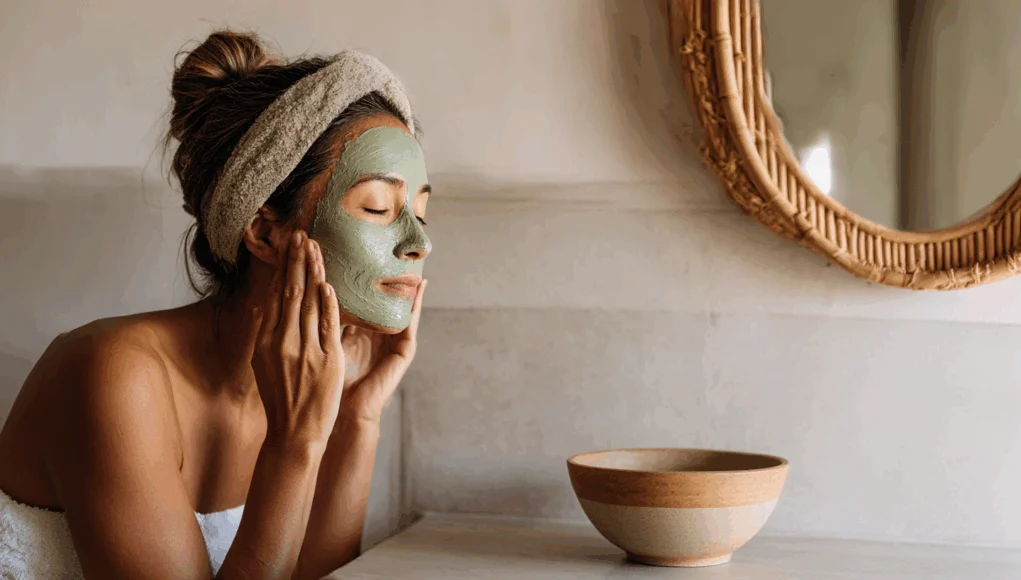
Photo via magfeminin.com
If you have acne-prone skin, a clay mask can help with excess oil, but it is not a treatment for acne itself — keep using whatever your dermatologist has recommended. If your skin is very reactive, patch test first: apply a small amount behind your ear or along your jawline, wait 24 hours, and only proceed if there is no redness or itching.
How to Apply a Clay Mask Properly
Application matters as much as the clay itself. A few small habits make the difference between a mask that leaves skin fresh and one that leaves it tight and irritated.
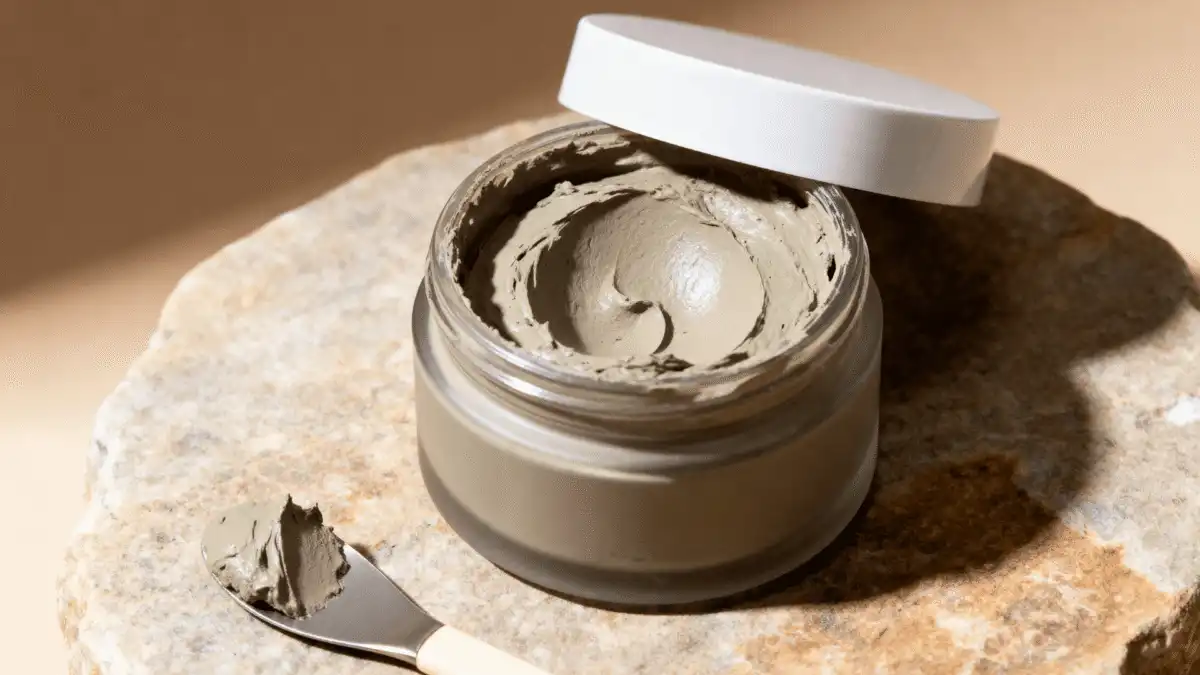
Photo via styleweekender.com
- Start with clean skin: wash your face with a gentle cleanser and pat it dry. A mask applied over makeup or sunscreen cannot do its job.
- Apply an even, thin layer: use clean fingers or a brush, avoiding the eye area and lips. A thin layer dries evenly; a thick one cracks and dries unevenly.
- Do not let it dry completely: this is the most important rule. Remove the mask when it is still slightly tacky — usually after 10 to 15 minutes. A fully dry, cracked mask has pulled too much moisture from the skin.
- Rinse with lukewarm water: soften the mask with a damp cloth first, then rinse gently. Hot water strips the skin and undoes the benefit.
- Moisturise immediately: follow with a hydrating serum and moisturiser while the skin is still slightly damp. Clay removes oil; moisturiser puts the balance back.
Once a week is enough for most skin types; oily skin can go twice. A weekly mask fits naturally into a self-care evening — the kind of reset described in Sunday Reset Checklist for Home and Body — and pairs well with other small rituals, from a fresh manicure with Natural Nail Designs with a Subtle Glow to a hair treatment from the ideas in Classy Natural Hairstyles.
Common Mistakes to Avoid
Leaving it on too long: longer is not better. Past 15 minutes, clay keeps pulling moisture from the skin, leaving it tight, dry and irritated.
Using it too often: daily clay masking strips the skin barrier and can trigger rebound oiliness. Once or twice a week is plenty.
Mixing with harsh actives: do not layer a clay mask over a strong acid peel or retinoid treatment on the same day. Space active treatments apart to avoid overloading the skin. The comparison in Physical vs Chemical Exfoliation for Your Skin explains how exfoliation fits around a mask day.
Skipping moisturiser: clay removes oil, and skin needs hydration afterwards. Skipping the moisturiser step leaves the barrier unprotected.
Using metal tools with bentonite: bentonite’s charge can react with metal bowls and spoons. Mix it with a wooden, glass or plastic utensil instead.
Healthy skin is also built from within — a balanced diet and the nutrients in Essential Vitamins for Women support the barrier that your skincare routine protects from the outside.
Frequently Asked Questions
How often should I use a clay mask?
Once a week suits most skin types. Oily or congested skin can use one twice a week, while dry or sensitive skin should stick to once a week or less. More frequent use risks stripping the skin barrier.
Should I let a clay mask dry completely?
No. Remove it while it is still slightly damp, usually after 10 to 15 minutes. A fully dry, cracked mask has drawn out too much moisture and can leave skin tight and irritated.
Which clay is best for sensitive skin?
Kaolin is the gentlest option and the best starting point for sensitive skin. Rhassoul is another mild choice. Avoid bentonite, which is much stronger and more drying.
Can I use a clay mask if I have acne?
A clay mask can help control the excess oil that contributes to congestion, but it is not a treatment for acne. Continue any prescribed acne treatment, and stop using the mask if it causes irritation or worsening breakouts.
Can I use a clay mask and exfoliate on the same day?
It is better to separate them. Both remove buildup, and doing both on the same day can over-exfoliate and irritate the skin. Alternate them across the week instead.
Final Thoughts
Choosing a clay mask comes down to one question: how oily is your skin? Kaolin for dry and sensitive, French green clay for normal and combination, bentonite for oily — applied thinly, removed before it dries fully, and always followed by moisturiser. Used once a week, the right clay is a simple, inexpensive way to keep skin clear and fresh, and a small ritual that makes a regular skincare routine feel like something worth looking forward to.
Disclaimer: This article is for general informational purposes only and does not constitute medical or dermatological advice. Skincare results vary from person to person. Patch test new products before use, and if you have a persistent skin concern, irritation, or a medical condition, please consult a dermatologist or healthcare professional.