Fine or thin-looking hair is one of the most common hair frustrations — and one of the most fixable. You cannot change the number of hairs on your head, but you can change how full they look. The right cut removes weight that drags hair flat, the right styling lifts it at the roots, and the right products add grip and body without heaviness.
This guide covers all three: the haircuts that make fine hair look thicker, the styling techniques that create volume that lasts, and the products that genuinely help. The difference between flat and full is often smaller than people think — a few centimetres off the length, a different parting, and a volumising mousse can transform how hair looks. The volume-focused styles in Trendy Hairstyles for Thin Hair to Boost Volume are a good place to start for inspiration.
Key Takeaways
- Shorter, layered, or blunt cuts make fine hair look thicker by removing weight and adding movement.
- Blow-drying with a round brush and lifting at the roots creates volume that lasts all day.
- Volumising mousse and root-lifting spray add body; heavy oils and rich conditioners flatten fine hair.
- Highlights and lowlights add visual dimension that makes hair look denser.
- Regular trims keep ends thick and blunt instead of wispy and thin.
Why Fine Hair Looks Flat
Fine hair has a smaller diameter per strand, so it lies closer to the scalp and shows the scalp more easily. Long fine hair is pulled flat by its own weight, and heavy products — rich conditioners, oils, and smoothing serums — coat the strands and make the problem worse. Heat damage and split ends thin the ends further, so the hair looks wispy exactly where it should look fullest.
None of this is a verdict on your hair. It is a set of physical facts that the right cut, styling, and products are designed to work around. The goal is not to fight fine hair but to style it in the way it responds best to.
The Best Haircuts for Thicker-Looking Hair
The cut is the foundation — no product can fully compensate for a shape that works against fine hair.
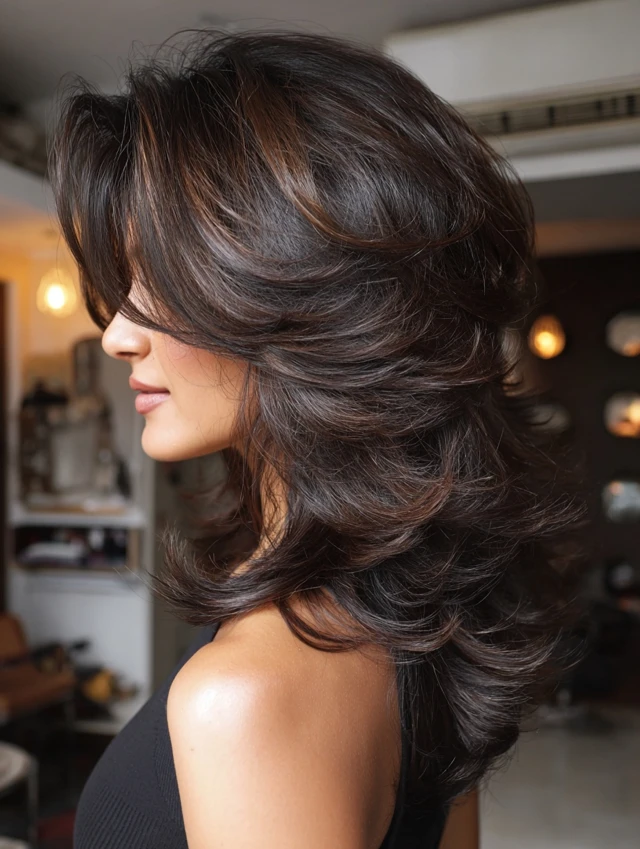
Photo via yourstyleinspo.com
Blunt Bob or Lob
A blunt cut with no layers makes the ends look as thick as possible, because every strand ends at the same point. A chin-length bob or a collarbone-length lob is the classic choice for fine hair, and it is easy to style with volume.
Long Layers
For those who want to keep length, long layers remove weight from the interior of the hair so the top layers lift more easily. The key is keeping the layers long — short, choppy layers can make fine hair look thinner by removing too much bulk from the ends.
Butterfly Cut
The butterfly cut combines short, face-framing layers with longer layers underneath, creating movement and the illusion of fullness. It is one of the most popular volume-creating cuts for a reason. The layered looks in Trendy Butterfly Haircut with Curtain Bangs show how the shape works at longer lengths.
Textured Bob
A bob with light internal texture gives fine hair grip and movement, so it does not sit flat. The textured shapes in Boho Bob Haircuts with Textured Styles are good examples of how texture creates the impression of density.
Bangs and Face-Framing Layers
Bangs add fullness around the face and draw the eye to the front, where hair is usually densest. Curtain bangs or a soft fringe can make the whole head of hair look thicker. The ideas in Bangs Haircut Ideas at the Collarbone show how a fringe changes the balance of a cut.
Styling Techniques That Add Real Volume
A good cut sets you up, but styling is what creates visible fullness day to day.
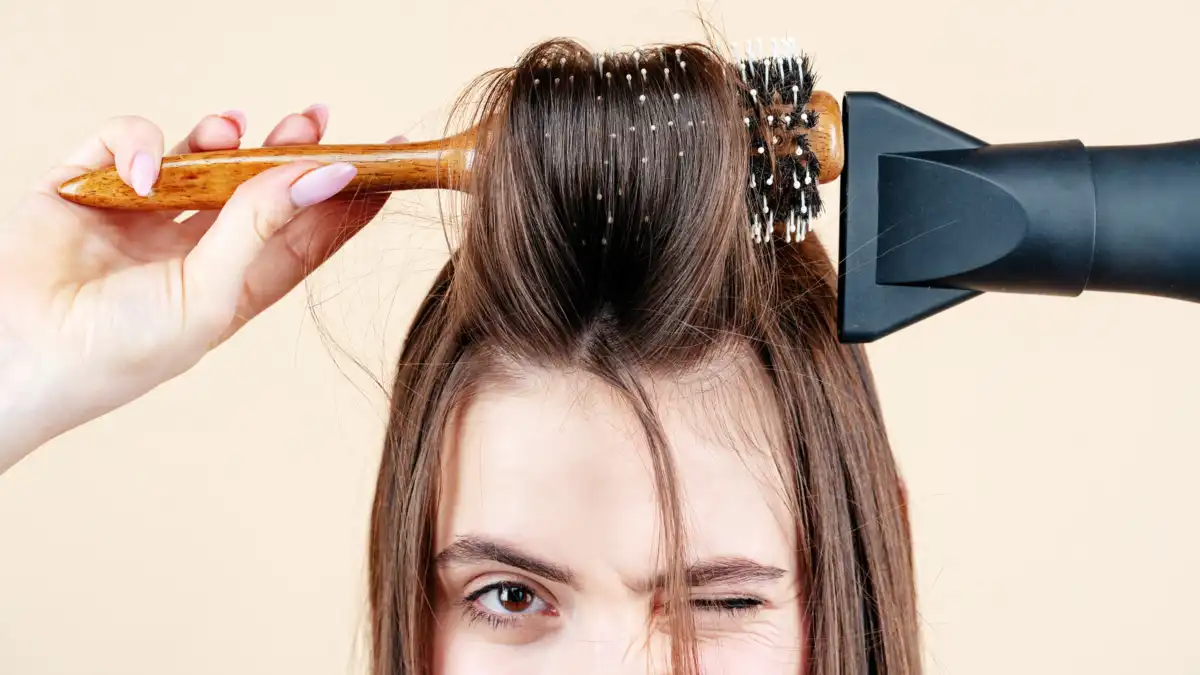
Photo via glam.com
Blow-Dry Upside Down
Flip your head over and rough-dry the roots until the hair is about 80 percent dry. Gravity pulls the roots away from the scalp as they dry, which is the simplest way to get lift that lasts. Finish with a round brush on the top sections for polish.
Use a Round Brush at the Roots
Wrap sections around a medium round brush, lift at the root, and direct the dryer at the base for a few seconds. Let the section cool on the brush before releasing — cooling sets the lift in place.
Change Your Parting
Hair trained into one parting lies flat along it. Switching the part to the opposite side, or moving it slightly off-centre, instantly adds root lift because the hair is not used to falling that way.
Try Velcro Rollers
Large velcro rollers at the crown, left in while you do your makeup, give soft, lasting volume without heat damage. Remove them just before you leave and shake the roots gently with your fingers.
Backcomb Sparingly
A little gentle backcombing at the crown, smoothed over with a brush, adds height for special occasions. Use it sparingly — frequent backcombing roughs up the cuticle and causes breakage over time.
Products That Make Hair Look Thicker
Product choice matters enormously for fine hair. The right formulas add body; the wrong ones flatten it within an hour.
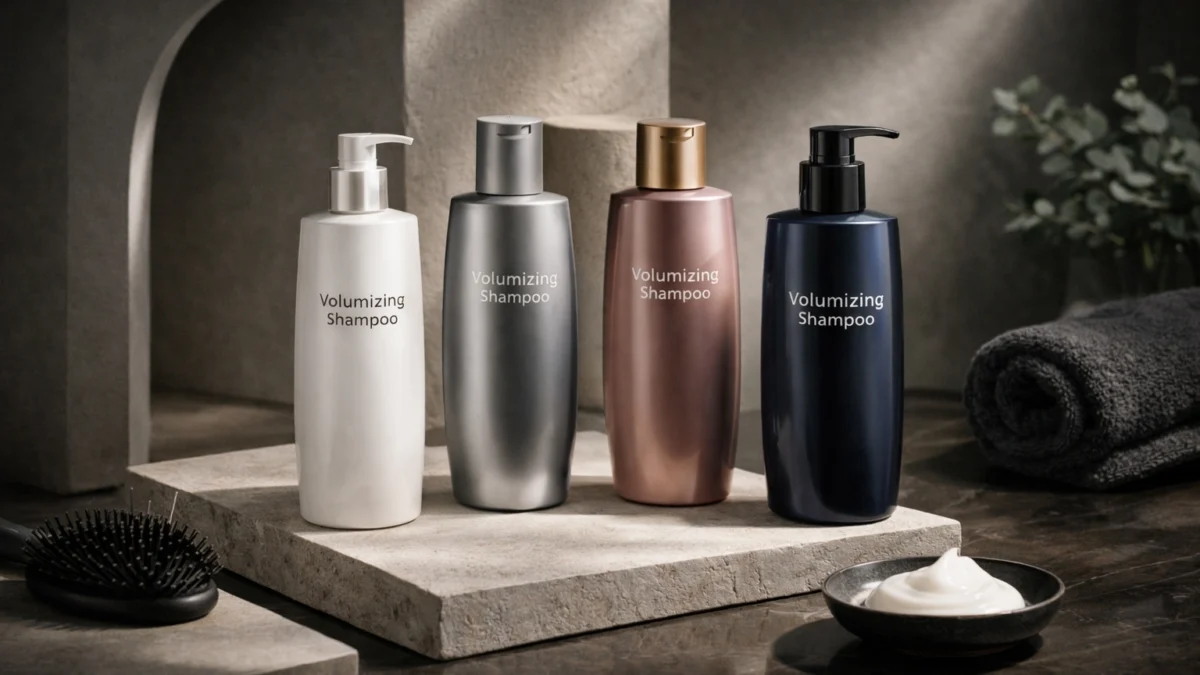
Photo via reviewstreets.com
- Volumising shampoo: lightweight formulas clean without leaving residue that weighs hair down. Avoid “moisturising” or “smoothing” shampoos on fine hair.
- Lightweight conditioner, ends only: apply conditioner from the mid-lengths down, never on the roots. A heavy conditioner at the scalp is the fastest way to kill volume.
- Volumising mousse: the single most effective volume product for fine hair. Apply a golf-ball-sized amount to damp roots and work through before blow-drying.
- Root-lifting spray: sprayed directly onto damp roots before drying, it adds grip and lift exactly where volume starts.
- Texturising spray or dry shampoo: both add grit and separation, which makes hair look denser. Dry shampoo on day two or three also refreshes volume at the roots.
- Thickening fibres or powders: for special occasions, fibre powders cling to existing strands and make the hair look visibly denser, especially at the parting.
What to avoid: heavy oils, rich hair masks used too often, and silicone-heavy serums applied near the roots. All of them coat fine hair and pull it flat.
Colour Tricks That Add Dimension
Colour is an underused tool for thicker-looking hair. A single flat colour shows every gap; dimension hides them.
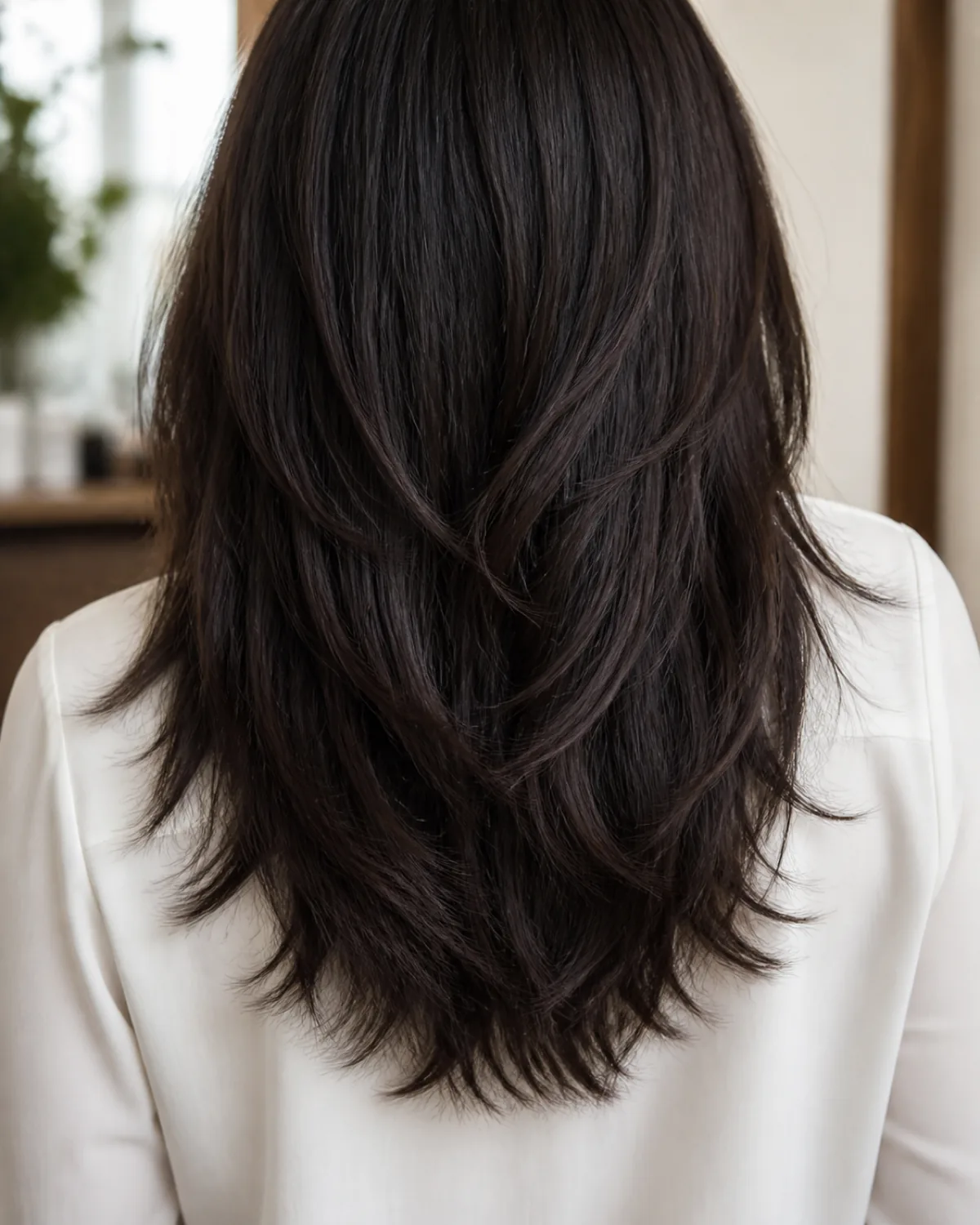
Photo via wavienne.com
Highlights and lowlights create contrast that makes hair look denser, because the eye reads the variation as depth. Face-framing highlights brighten the front, while a slightly darker shade underneath adds the illusion of weight. Balayage and soft, blended colour work better than harsh stripes, which can look thin at the regrowth line. The layered, dimensional styles in Wavy Haircut Ideas with Collarbone Layers and Simple Volume Hairstyles for Long Hair both use colour and layering together to create fullness.
Daily Habits That Keep Fine Hair Looking Full
Trim every six to eight weeks: blunt, healthy ends look thicker than wispy split ends. Regular trims are the cheapest volume treatment there is.
Wash when needed, not on a schedule: fine hair shows oil faster than thick hair, and oily roots lie flat. Washing every one to two days, or using dry shampoo in between, keeps volume up.
Sleep with hair loosely up: a loose topknot or braid overnight preserves root lift and prevents the flattening that comes from sleeping on loose hair.
Avoid over-brushing: brushing fine hair too often pulls out volume and can cause breakage. A wide-tooth comb or a few gentle strokes are enough.
Protect from heat damage: damaged hair looks thinner because the ends fray and break. Always use a heat protectant before styling tools.
Frequently Asked Questions
What haircut makes thin hair look thickest?
A blunt bob or lob is usually the most effective, because every strand ends at the same point and the ends look as dense as possible. Long layers and butterfly cuts are the best options if you want to keep length, since they remove weight and add movement.
Does volumising shampoo really work?
Volumising shampoos help mainly by what they leave out — they clean without heavy conditioning agents that weigh fine hair down. The volume itself comes more from mousse, root spray, and blow-drying technique, but a lightweight shampoo is the right foundation.
Can highlights make hair look thicker?
Yes. Highlights and lowlights add contrast and dimension, which the eye reads as depth and density. A single flat colour, especially a very dark one, tends to show the scalp more. Soft, blended colour works best.
Is it better to keep fine hair short or long?
Shorter hair almost always looks thicker, because there is less weight pulling it flat and the ends stay blunter. That said, long hair with long layers, regular trims, and good styling can look full too — it just takes more effort to maintain the volume.
Why does my hair look thinner at the ends?
Ends are the oldest part of the hair and the most exposed to damage — heat, brushing, sun, and chemical treatments all thin them over time. Regular trims, heat protectant, and gentle handling keep the ends looking dense rather than wispy.
Final Thoughts
Thicker-looking hair is a combination, not a single trick: a cut that removes weight, styling that lifts the roots, products that add body without heaviness, and colour that creates dimension. Start with the change that feels easiest — a blunt trim, a volumising mousse, or a new parting — and build from there. Fine hair responds quickly to the right approach, and the difference is visible from the first wash.
Disclaimer: This article is for general informational purposes only and does not constitute medical or professional advice. If you are experiencing sudden or significant hair thinning or hair loss, please consult a dermatologist or trichologist to rule out underlying causes before relying on styling changes alone.