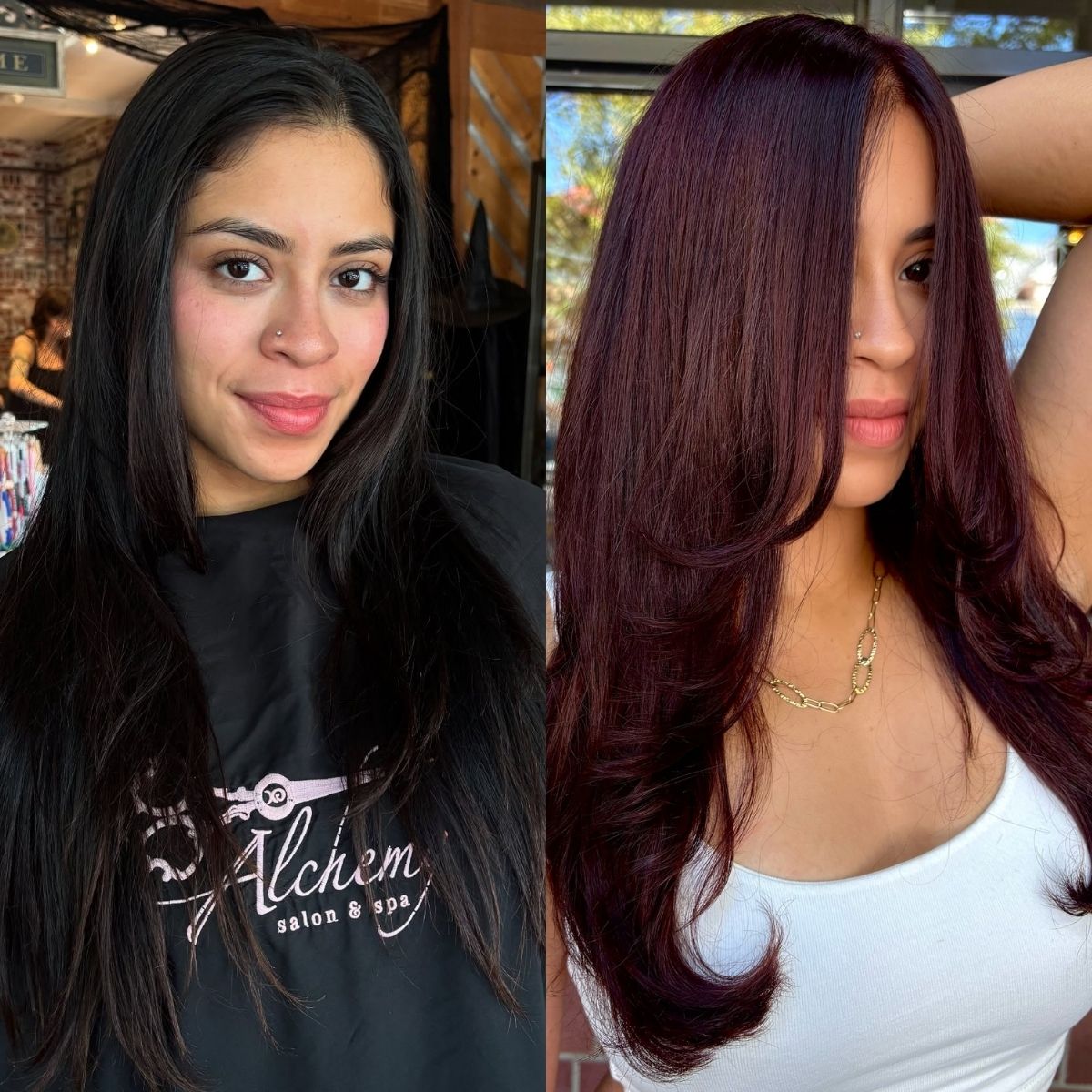
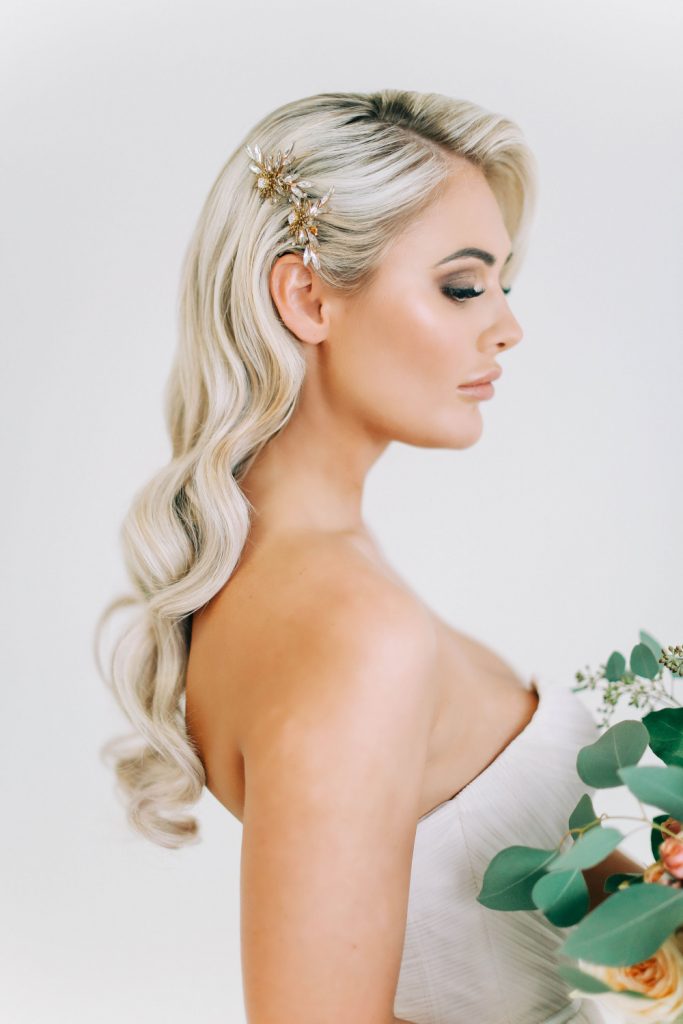
A round face does not need hiding — it needs architecture. The haircuts that flatter full cheeks and soft jawlines all do the same quiet work: they add vertical lines, carve diagonal edges, and build height where it counts. This winter, the strongest options for round faces lean into texture and asymmetry rather than strict symmetry, from curtain-bang shags to sharply angled bobs. Here are 24 winter haircuts worth discussing with your stylist, each with honest notes on upkeep and who it suits best. You’ll find the same spirit in Winter Hair Color for Black Women.
Curtain-Bang Shag with Collarbone-Skimming Layers

Courtesy of: hairtical.com
The shag earns its reputation on round faces by doing two things at once: the curtain bangs carve diagonal lines across the widest part of the face, and layers that end around the collarbone pull the eye downward instead of outward. Fine hair benefits from the interior texture, which creates the illusion of density without heavy styling. Ask your stylist to keep the shortest face-framing pieces at cheekbone level so they skim rather than sit on the cheeks. We break down a similar look in Flattering Spring Haircuts 2026 for Chubby Faces Modern Cuts That Define.
Styling takes about ten minutes with a round brush or a large-barrel curling iron flicked outward at the ends. The trade-off is fringe maintenance — curtain bangs need a quick blow-dry most mornings to fall correctly, and the layers want a trim every six to eight weeks before they grow into shapelessness. Best for straight to wavy textures; very curly hair turns this cut into a different silhouette entirely. Related reading: Bixie Haircuts for Women takes the same concept further.
Asymmetrical Lob with a Deep Side Part

Photo credit: fitsbydee.com
Asymmetry is a round face’s best friend, and the asymmetrical lob commits to it fully: one side falls a touch longer, breaking the mirror symmetry that emphasizes width. A deep side part adds a diagonal sweep across the forehead, which visually lengthens the face before the cut even starts. The lob length keeps everything polished enough for the office while the uneven hem keeps it from reading corporate-stiff.
This is one of the easier cuts to maintain — trims every eight weeks keep the angle crisp, and it air-dries reasonably well on straight or slightly wavy hair. The risk is a stylist who plays it too safe and cuts the asymmetry so subtle it disappears; bring a photo and ask for at least an inch and a half of difference. Fine hair holds this shape well since the line, not the volume, does the work.
Chin-Length Bob with Wispy Fringe

Image credit: forhairstylesinspo.com
A chin-length bob can go wrong on round faces when it lands as one solid horizontal block, but wispy fringe and soft interior layering change the equation. The light, see-through fringe adds a vertical break at the forehead while the layers keep the sides from puffing outward. It reads fresh and youthful without the heaviness of a blunt full bang.
The fringe is the upkeep item — expect a trim every three to four weeks, either at the salon or carefully at home with thinning shears. The cut itself needs little daily effort: a quick tousle with texture spray is enough for wavy hair, while straight hair benefits from a flat iron pass on the ends. Skip this if you hate anything on your forehead; the fringe is non-negotiable to the look. Our A Line Bob Haircuts rounds up more takes on this exact idea.
Long Layers with Face-Framing Pieces

Source: yourstyleinspo.com
Keeping length is not the enemy of a round face — unstructured length is. Long layers that start at the cheekbones and cascade downward create vertical movement that elongates the whole silhouette, while face-framing pieces draw a soft border that narrows the cheeks. A middle part strengthens the effect by splitting the face into two longer-looking halves.
This is the lowest-commitment cut on the list: trims every ten to twelve weeks, no bangs to fuss over, and it survives second-day hair gracefully. The honest downside is that fine, limp hair can let the layers collapse into a triangle at the shoulders; ask for weight removal through the mid-lengths if your hair is dense, or subtle layering if it is fine. Winter hats will flatten the crown, so a little root lift on wash days pays off.
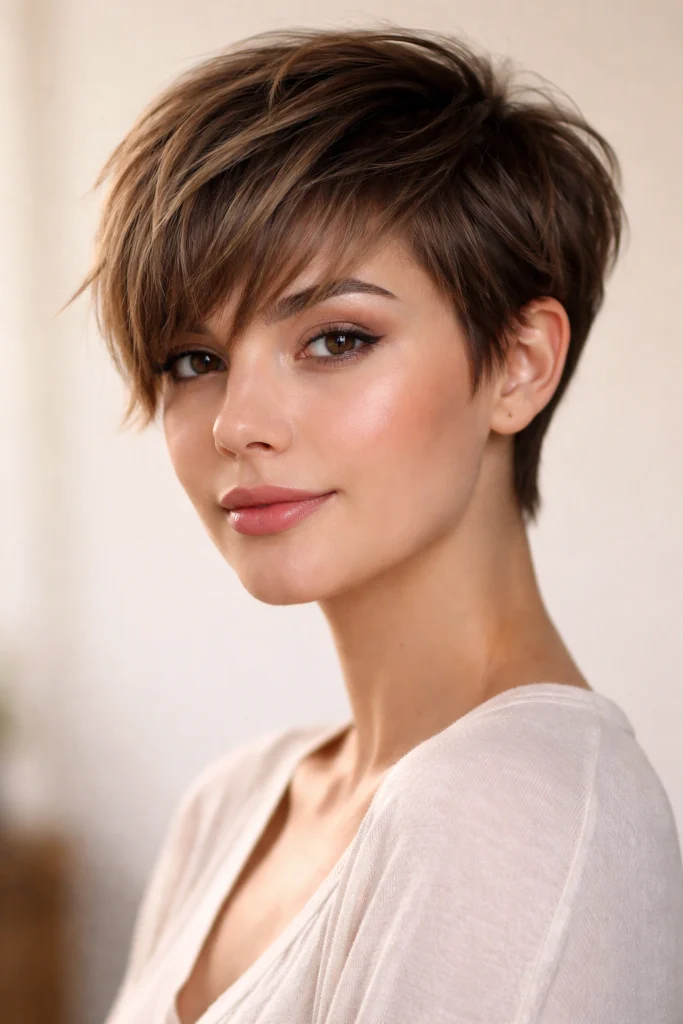
Textured Pixie with Side-Swept Bangs
Via hairtical.com
The pixie myth says short hair exposes a round face; the truth is that a uniform, blunt pixie does. This version keeps length on top and sweeps the bangs diagonally across the forehead, which cuts the widest part of the face on a slant. The textured crown adds height — the single most flattering element any short cut can offer a round face — while the tapered sides keep the silhouette narrow.
Expect salon visits every four to six weeks; a pixie loses its shape fast. Daily styling is quick — a dab of matte paste and two minutes of finger-styling — but the cut is not wash-and-go for cowlicks, which may need a targeted blow-dry. This is absolutely a salon cut; the angles are too precise to attempt at home. The concept gets a fuller treatment in Airy Butterfly Haircuts Summer 2026.
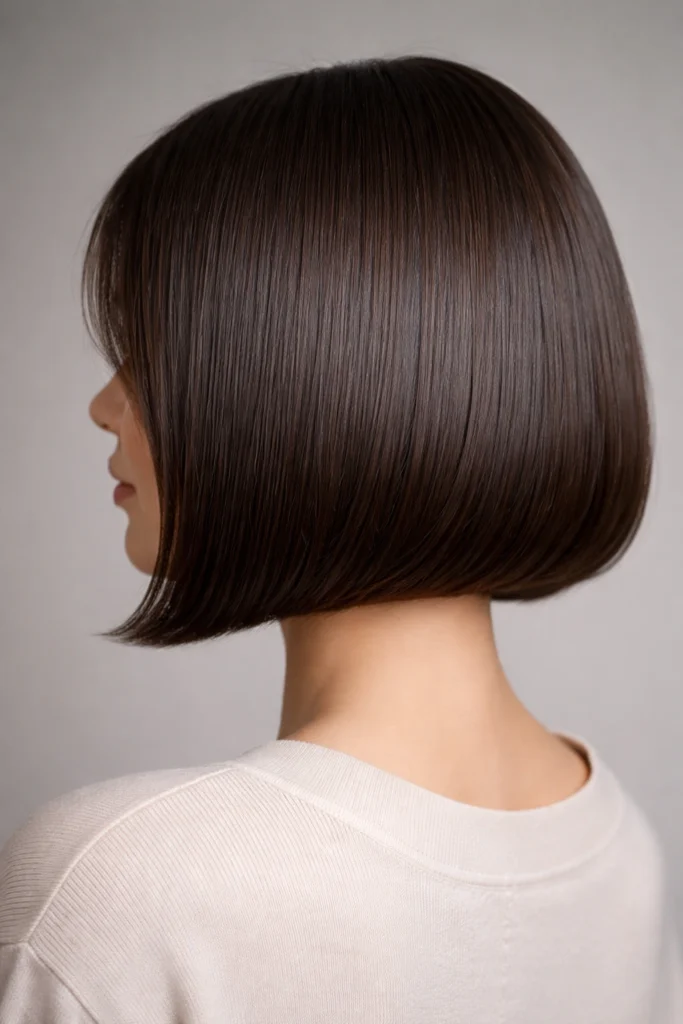
Blunt Collarbone Bob with Rounded Ends
Courtesy of: hairtical.com
A blunt bob at collarbone length works on round faces precisely because it refuses to end at the chin, where a horizontal line would echo the face’s width. The collarbone landing spot sits below the jaw, drawing the eye down, while softly rounded ends tuck the silhouette inward instead of flaring out. On straight, medium-density hair the cut looks expensive with almost no effort.
Maintenance is the catch: blunt ends show every split end, so trims every six weeks are non-negotiable, and humidity will test the line. Straight styling with a flat iron keeps it crisp; air-drying works if your hair is naturally straight and the ends were rounded properly in the chair. Those with very thick hair should ask for hidden internal layering to prevent the dreaded triangle.
Voluminous Wolf Cut with Curtain Bangs
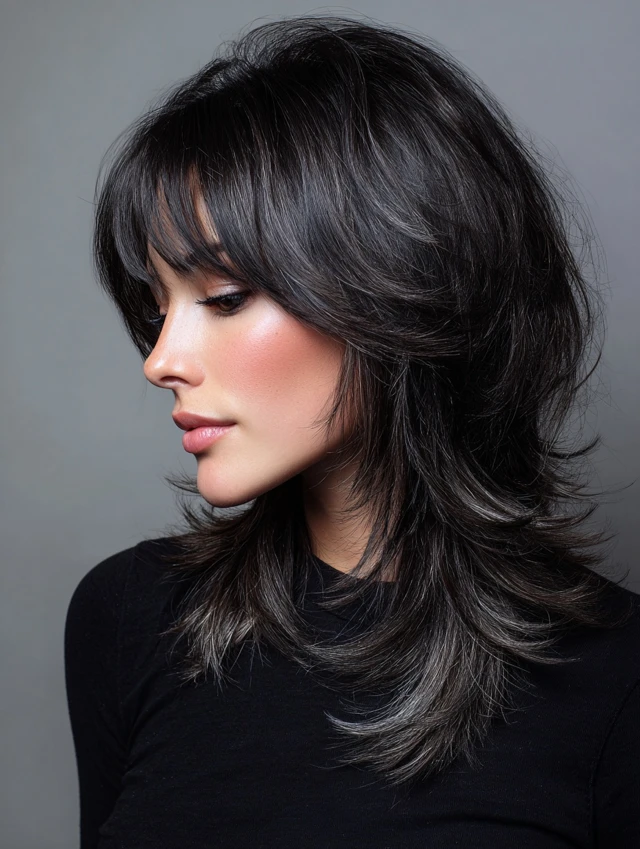
Photo credit: womenshairtoday.com
The wolf cut’s genius for round faces is its top-heavy shape: volume concentrates at the crown and the lengths taper, which builds the height that lengthens a full face. Curtain bangs open at the center and sweep outward, framing the cheekbones instead of covering them. The choppy layers keep everything moving so the cut never sits as one wide block.
This cut loves texture — wavy and curly hair get the best version of it, while very fine straight hair may need a texturizing spray to keep the layers from falling flat. Trims every eight weeks keep the shape intentional rather than grown-out. Be honest with yourself about styling appetite: the wolf cut looks best with a little deliberate messiness, which takes five minutes with a diffuser or sea-salt spray, not zero.
Copper Wavy Bob with Soft Side-Swept Fringe

Image credit: cleodiva.com
Color can do face-framing work too, and this copper wavy bob proves it: the warm, dimensional tone catches winter light and keeps attention on the hair’s movement rather than the face’s width. The waves are cut to fall forward over the cheeks in soft S-shapes, and the side-swept fringe draws a diagonal across the forehead. It is one of the most forgiving cuts here for anyone nervous about going short. We covered this territory more deeply in Easy Chic Winter Hairstyles for Women in 2025 2026 That Elevate Your Everyday Style.
Copper is a commitment — red tones fade fastest, so expect a gloss or toner refresh every four to six weeks to keep it from turning brassy. The cut itself is low-drama: trims every eight weeks, and the waves can be revived with a curling wand on the front sections only. Best on medium-density wavy hair; very fine hair may need the layers kept minimal so the ends do not look sparse.
Sleek Chin Bob with a Middle Part

Source: cleodiva.com
Simplicity done precisely: a sleek chin bob with a dead-center part splits a round face into two vertical panels, which reads longer than the same cut with a side part. The blunt ends give fine hair the appearance of thickness, and the glassy finish keeps the whole thing intentional rather than severe. This is the cut for anyone who wants a round-face-friendly style that takes ten minutes a morning.
The precision is the whole job — a flat iron, heat protectant, and a smoothing serum are the daily toolkit, and trims every four to six weeks keep the line from softening. Humidity is the enemy; on damp days, a light anti-frizz cream before ironing makes the difference. Fine, straight hair gets the best version of this cut; wavy hair will fight the sleekness unless you commit to the iron daily.
Mid-Length Layered Cut with S-Waves

Via itakeyou.co.uk
Mid-length is the sweet spot for round faces that want movement without losing the elongating effect of longer hair. Layers through the mid-lengths break up the sides so they do not sit as one wide curtain, and soft S-waves bent away from the face add width only where it flatters — at the cheekbones and below. The result feels romantic rather than severe, which suits winter’s softer dressing. For a different spin on the same theme, browse Fall Bob Haircuts 2026.
Waves hold best on day-old hair, so this cut actually rewards skipping a wash; a curling iron on the mid-lengths takes about fifteen minutes. Trims every eight to ten weeks keep the layers from growing heavy. The caveat: this cut needs some density to show the waves. Very fine hair should keep the layers long and minimal so the ends stay full.
Tapered Pixie with a Clean Nape and Textured Crown
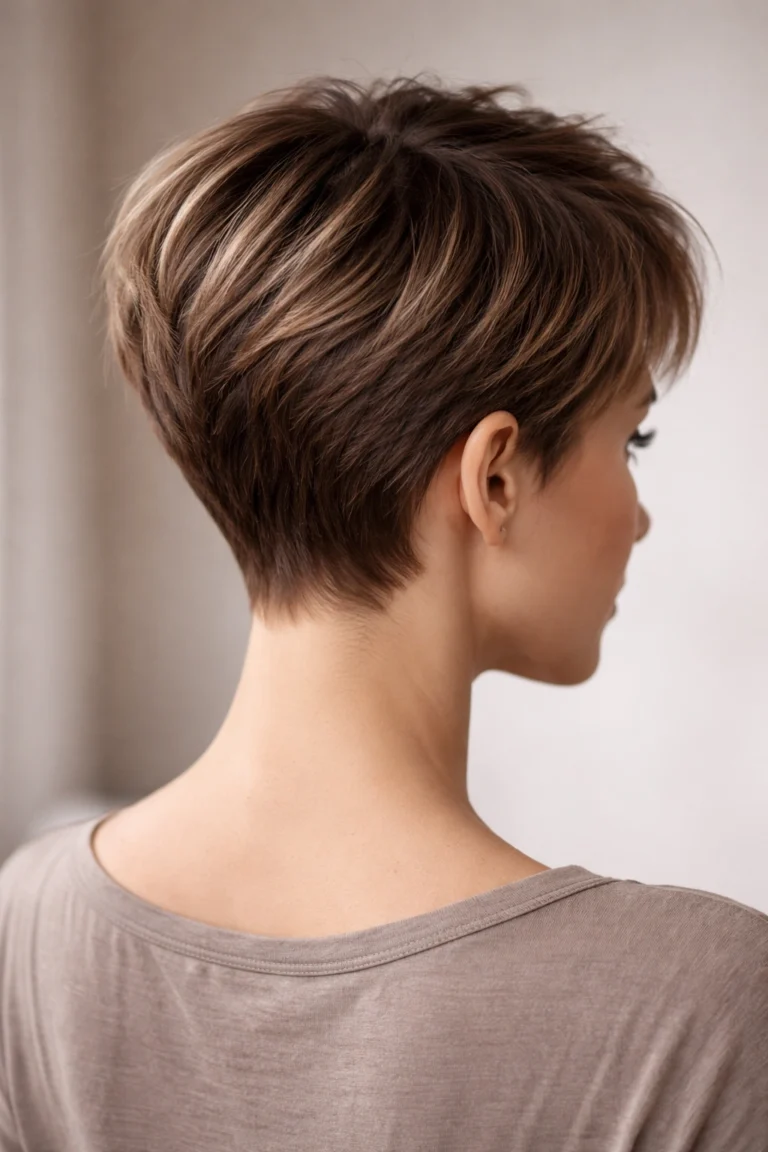
Courtesy of: hairtical.com
Seen from behind, the architecture of this cut is obvious: a clean, tapered nape keeps the silhouette narrow while the crown stays long and textured for height. Subtle highlights through the top catch the light and add dimension, which stops the cut from reading flat. For round faces, the contrast between the slim nape and the fuller top is exactly what creates the illusion of length.
Nape tapers grow out fastest, so plan on cleanups every four weeks if you want the crisp line. The crown is the easy part — finger-styling with a little texture paste takes two minutes. This suits straight to slightly wavy hair best; tight curls will change the taper’s behavior and need a stylist experienced with curl patterns.
French Bob with Soft Wispy Fringe

Photo credit: floeyeliner.com
The French bob’s jaw-skimming length sounds risky for round faces, but the soft, wispy fringe is the corrective: instead of a heavy straight-across bang that shortens the face, the feathered fringe adds a light vertical texture at the forehead. Tousled, piecey ends keep the bob from sitting as a solid helmet, and the overall effect is chic rather than severe. For readers who want more, Trendy Haircuts for Round Faces in 2026 Face Framing Cuts That Look Amazing keeps the ideas coming.
This cut lives or dies on texture — air-dry with a little mousse scrunched in, or rough-dry with your fingers for the undone finish. The fringe needs trimming every three to four weeks. It suits fine to medium hair; very thick hair will need serious weight removal or the bob goes triangular. Winter bonus: it looks fantastic under a beret.
Deep Side-Part Shag with Feathered Ends
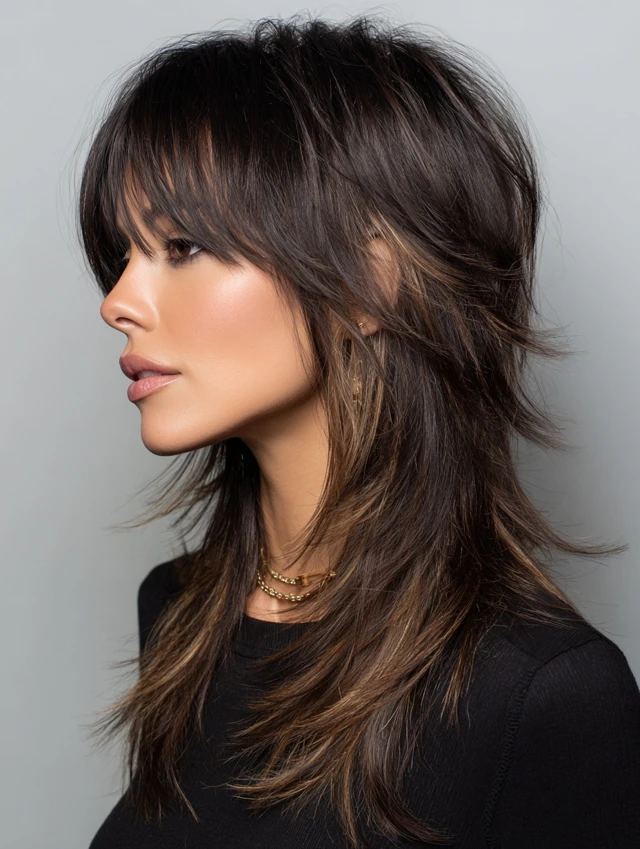
Image credit: womenshairtoday.com
Moving the part deep to one side is the oldest trick in the round-face playbook, and pairing it with a feathered shag doubles the payoff. The deep part creates an immediate diagonal sweep, while the feathered ends flick outward and away, keeping volume off the cheeks. The layers stay long enough to tuck behind one ear — a small styling move that slims the face in seconds.
Feathered ends need sharp layers, so trims every six to eight weeks matter; grown-out feathers just look thin. Styling is a round brush flicked outward, or a straightener turned at the very ends. This cut is kind to medium and thick hair; fine hair should keep the feathering subtle or the ends will look wispy rather than feathered.
Bixie with Long Piecey Fringe
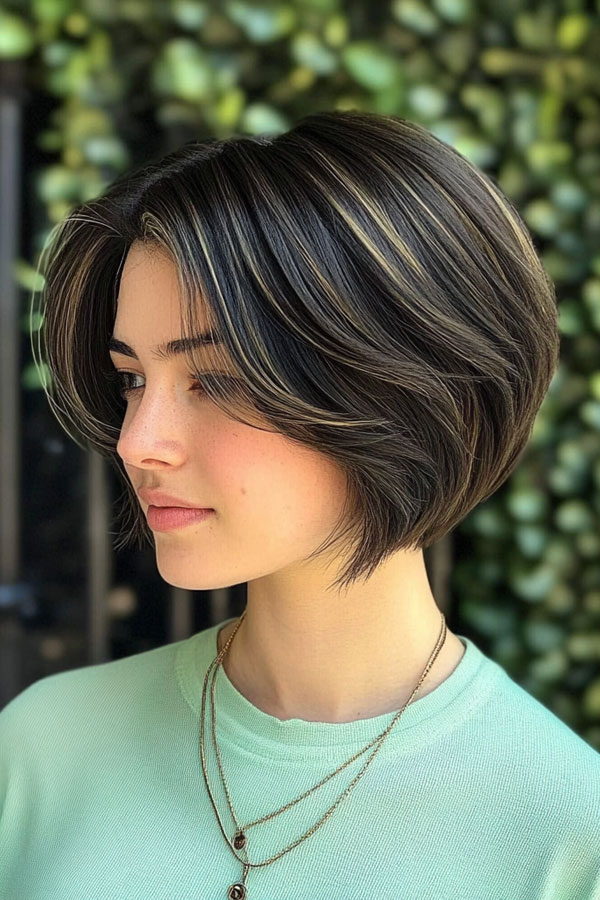
Source: itakeyou.co.uk
The bixie splits the difference between a bob and a pixie, and that in-between length is useful on round faces: long enough to frame and soften, short enough to keep height on top. The long piecey fringe sweeps across the forehead in separated strands, which breaks up width without the commitment of a full bang. It reads modern and a little bit edgy.
Growing-out phases are this cut’s awkward stage — between week six and week ten the shape can look undecided, so book trims every five to six weeks to stay ahead of it. Daily styling is minimal: texture spray and finger-combing. It works across densities, though very thick hair needs the interior thinned so the fringe does not turn into a shelf. For the fuller picture, Cozy Winter Brunette Hair Color is worth your time.
Color-Blocked Shag with Bold Blonde Face-Framing

Via hairtical.com
Here color does the face-framing: bold blonde panels placed around the face draw two bright vertical lines that visually narrow the cheeks, while the dark base keeps the rest of the hair receding. The long shag underneath adds the texture and movement that stop the color from looking like a costume. It is a statement, but a strategic one.
Color-blocking needs a colorist who understands placement — this is not a DIY job — and the blonde panels want a purple shampoo routine plus gloss refreshes every six weeks to stay bright against the dark base. The cut itself is a standard long shag: trims every eight to ten weeks. Best on medium to thick hair that can support the contrast without the blonde pieces looking sparse.
Choppy Textured Bob
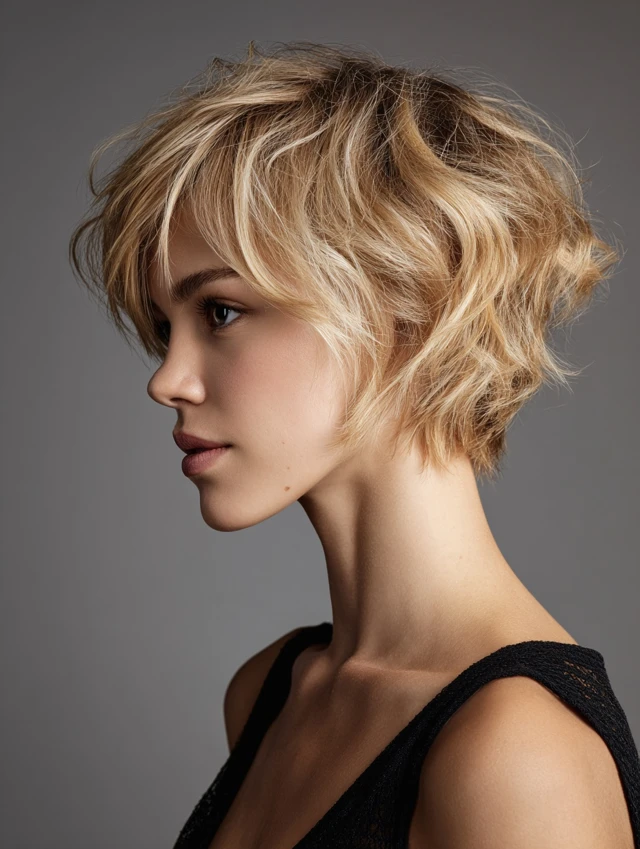
Courtesy of: womenshairtoday.com
Choppy layers are the antidote to the round, helmet-like bob: by breaking the perimeter into uneven, textured pieces, the cut refuses to form the solid horizontal line that emphasizes width. The ends kick out in different directions, which creates movement and a slightly undone edge that feels current. On thin, wavy hair the texture fakes fullness convincingly.
The irony of an “undone” cut is that it needs regular shaping — trims every six weeks keep the chop deliberate rather than ragged. Styling is genuinely easy: air-dry with texture spray, or rough-dry upside down for lift. Fine hair gets the best version; very thick hair needs the interior debulked or the chop turns into bulk. This pairs naturally with the ideas in Best Homecoming Hairstyles for Short Hair.
Angled Bob with a Longer Front

Photo credit: fitsbydee.com
The angled bob is pure geometry in service of a round face: stacked shorter at the back and sweeping longer toward the front, it builds height at the crown and pulls every line downward past the jaw. The longer front pieces act like curtains that slim the cheeks, and the stacked back keeps the silhouette from widening. It is one of the most reliably flattering short cuts for full faces.
The angle needs refreshing every six weeks or the back creeps down and the geometry softens. Daily styling is straightforward — blow-dry with a round brush following the angle forward, or flat-iron the front pieces. Straight to slightly wavy hair holds the line best; curly hair will fight the angle unless you straighten daily, which is a real time cost to weigh.
Layered Shoulder-Length Cut with a Side Part

Image credit: womenshairtoday.com
Shoulder length with a side part is the quiet achiever of this list: no drama, no fringe commitment, just layers that keep the sides moving and a part that breaks symmetry. The layers start below the chin so they never add width where the face is widest, and the side part sweeps the front pieces diagonally. It is the cut to choose when you want flattering without a conversation piece.
Trims every eight to ten weeks, and it tolerates air-drying better than most cuts here. The side part can be flipped to refresh volume at the roots — a useful trick on day two or three. Works across hair types, though very fine hair should keep layers minimal and very curly hair should ask for dry-cutting so the layers land correctly. A companion piece, Winter Haircuts, explores the same palette.
Curly Choppy Bob with Volume
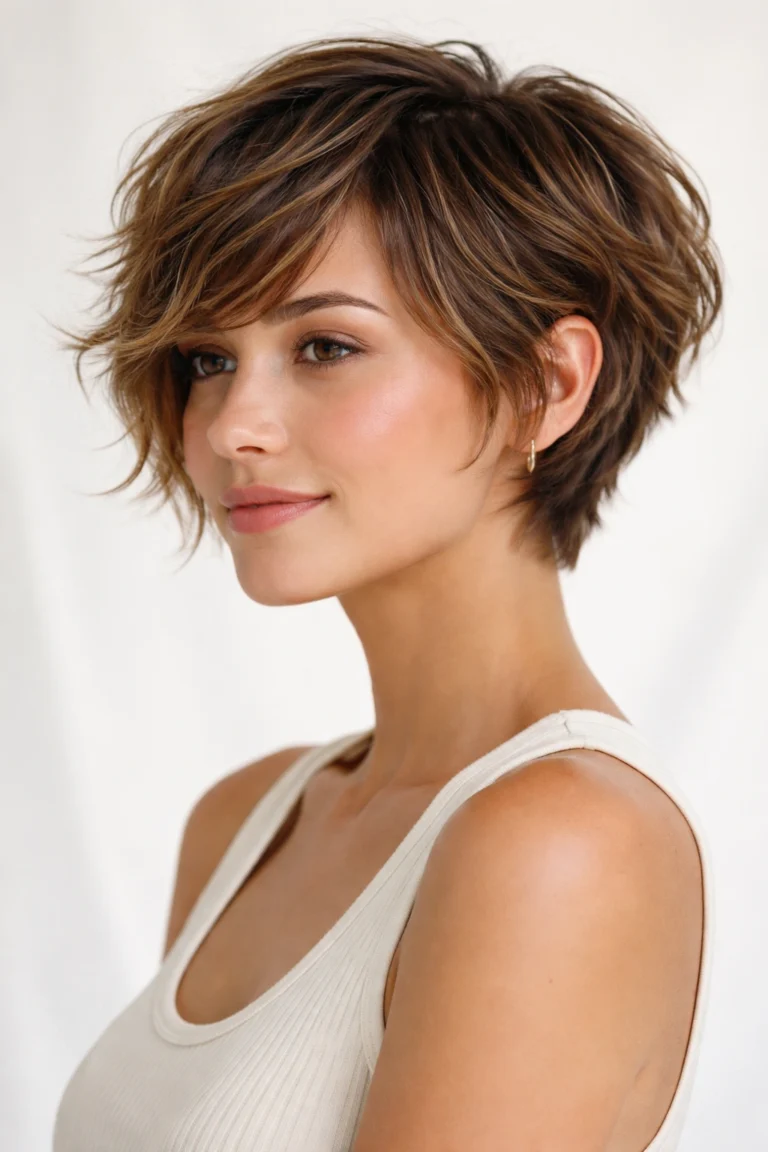
Source: hairtical.com
Curly hair and round faces are a natural pairing when the cut is shaped correctly: a choppy bob that keeps volume at the crown and tapers through the ends creates the height-and-narrow shape that flatters. The chop breaks up the curl pattern so it does not form one wide triangle, and the bounce keeps everything lively instead of heavy. This is the cut that lets curls be curls.
Curly cuts need a stylist who cuts dry or understands curl shrinkage — this is the single most important booking decision. Trims every eight to twelve weeks, and the routine is wash-day focused: leave-in conditioner, curl cream, diffuser. The trade-off is wash-day time, but the payoff is several days of wear with just a morning refresh.
Feathered Bronde Lob with Face-Framing Layers
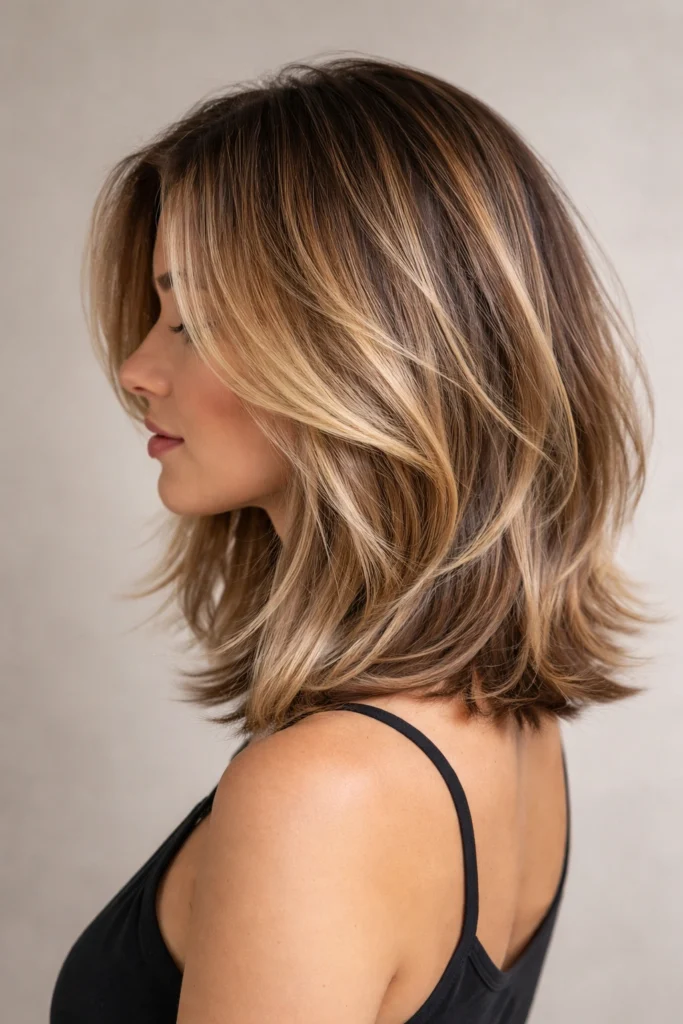
Via hairtical.com
Bronde — the brown-blonde middle ground — flatters round faces two ways: the dimension keeps the eye moving through the hair instead of resting on the face’s width, and the face-framing layers are cut to flick forward, narrowing the cheeks. The feathered ends keep the lob light so it never sits as a heavy block at the jaw. It is polished without being severe, and the color grows out gracefully.
Balayage means color appointments stretch to ten or twelve weeks, which is the main practical win. The cut needs trims every eight weeks to keep the feathering crisp. Styling is a large round brush or a curling iron on the front layers only — the rest can air-dry. Suits medium to thick hair best; the dimension needs some density to read.
Blonde Shaggy Bob with Curtain Bangs and Shadow Roots

Courtesy of: cleodiva.com
Shadow roots do quiet structural work: the darker root melts into blonde lengths, and that vertical gradient reads as length on the face. Pair it with a shaggy bob and curtain bangs and you get texture at the crown, diagonal lines at the forehead, and a lived-in color that does not demand monthly salon visits. The tousled finish keeps the whole thing relaxed. See also Trendy Haircuts for Women Over 50 2027 for more variations on this look.
The shadow root is the low-maintenance hero — root touch-ups stretch to eight or ten weeks — but the blonde lengths still need purple shampoo and the occasional gloss to stay clean-toned. The cut wants trims every eight weeks and a little texture spray most mornings. Best for medium-density hair; very fine hair can look stringy in a shaggy bob, so keep the layers conservative.
Sleek Side-Parted Crop with a Tucked Side
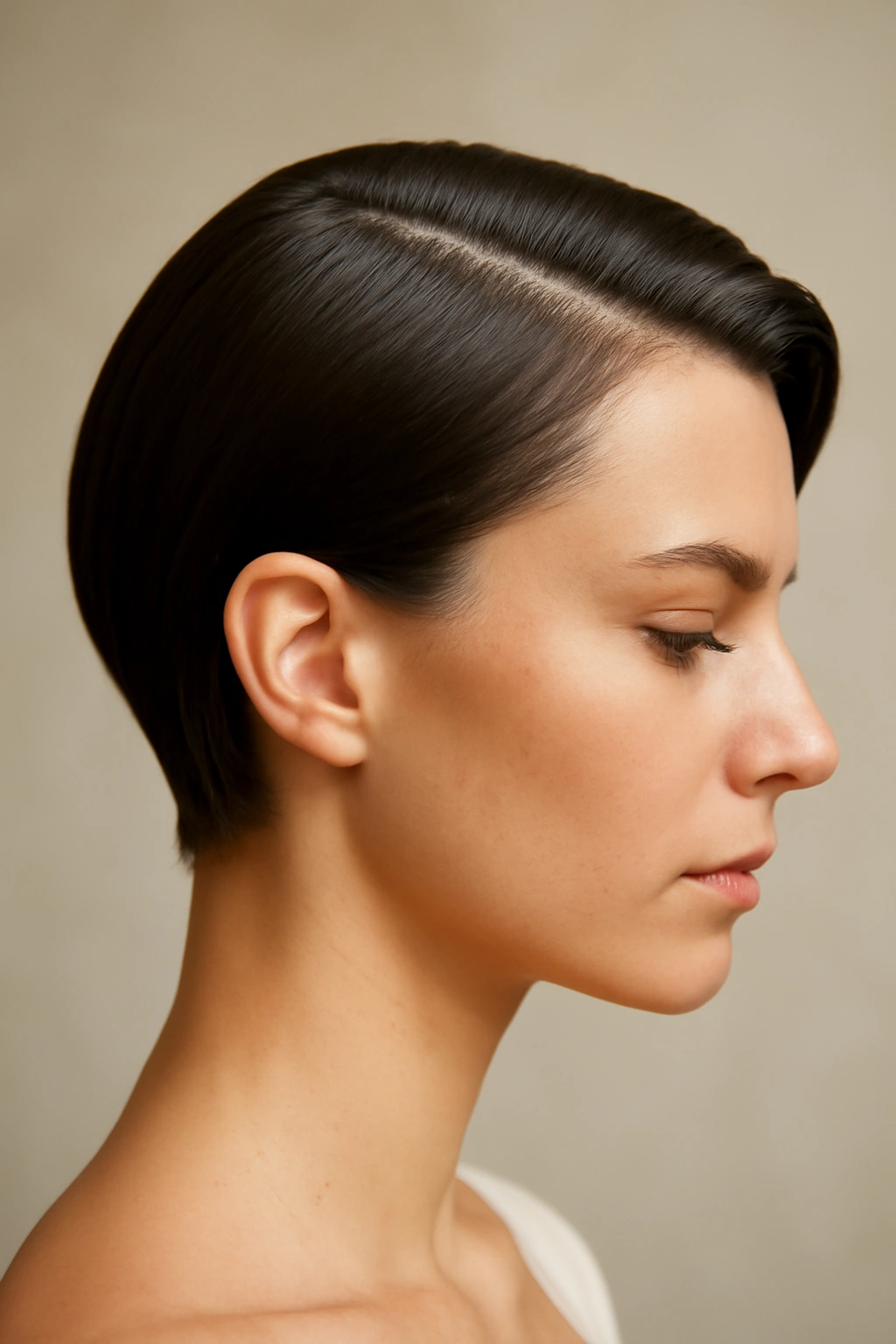
Photo credit: hairtical.com
Tucking one side behind the ear is a five-second styling move that genuinely slims a round face: it opens up the cheekbone on one side and creates asymmetry where there was none. The sleek side part keeps the crown smooth and close, so all the width stays out of the silhouette, and the short crop length shows off the jawline instead of hiding it. Minimal, architectural, and very winter-evening.
This needs a cut with enough length on top to tuck — ask your stylist to keep the sides sweepable rather than buzzed tight. Daily styling is a flat iron pass and a smoothing serum; trims every five to six weeks. It suits straight hair best and anyone comfortable with their ears showing. The tucked side will need re-tucking through the day, which is the honest small price.
Feathered Long Layers with Curtain Fringe in Rich Brunette
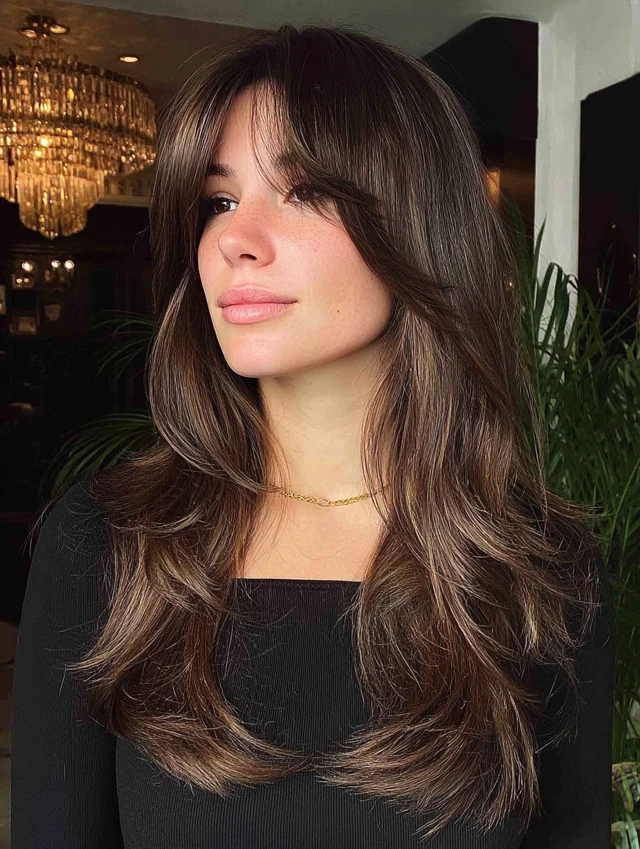
Image credit: fitsbydee.com
Rich, glossy brunette with feathered long layers is the low-risk showstopper for round faces: the curtain fringe parts in the middle and sweeps outward, framing the cheekbones in soft diagonal lines, while the feathered layers keep the lengths airy and vertical. The shine of a healthy brunette finish does its own face-framing by reflecting light along the hair’s length. Winter’s low sun makes this color look especially expensive. The same idea, styled another way, appears in Summer Haircuts for 2026.
A gloss treatment every six to eight weeks keeps brunette from going dull — this is the main upkeep cost, and it is salon or at-home depending on your comfort. The cut is easy: trims every ten to twelve weeks, and the curtain fringe needs a round-brush flick most mornings. Suits medium to thick hair; the feathering needs density to avoid looking thin at the ends.
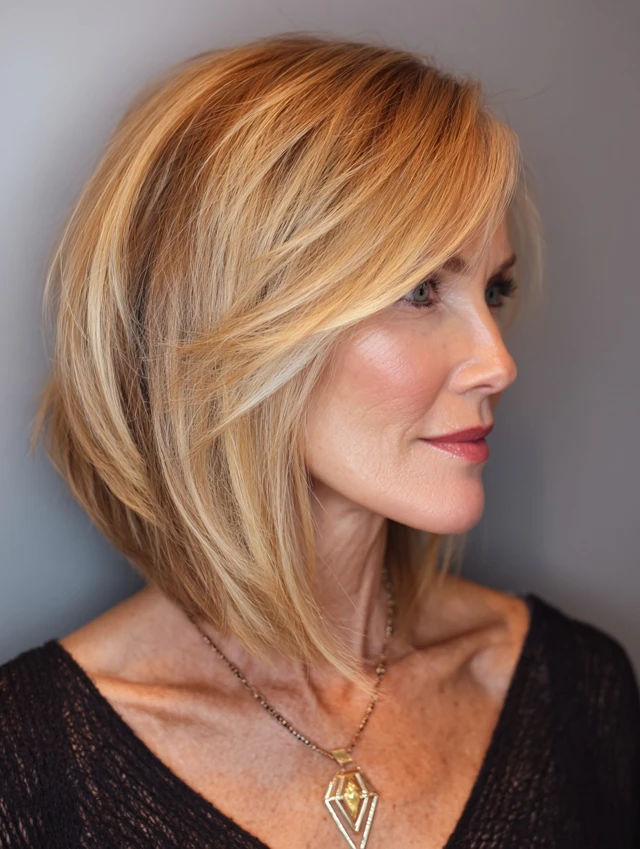
Golden Angled Bob with Side-Swept Fringe
Source: outfitarea.com
The final cut combines two of the strongest round-face strategies: an angled silhouette that is shorter behind and longer in front, and a side-swept fringe that crosses the forehead diagonally. The golden blonde tone warms the complexion through winter’s gray months, and the longer front pieces draw the eye down past the jaw. It is polished enough for work and soft enough for weekends.
Blonde maintenance is real — root touch-ups every six to eight weeks and purple shampoo to keep the gold from tipping brassy. The cut needs trims every six weeks to hold the angle and the fringe. This suits fine to medium hair well; the angle gives structure that fine hair often lacks. If you are growing out grays, the golden tone blends regrowth more forgivingly than ash blonde.
Final Thoughts
The strongest of these 24 cuts work because of shape and line — diagonal fringes, vertical layers, height at the crown — not simply because they are short or long. A round face flatters most when the haircut adds angles the face does not have and length where the face is widest. Choose based on your texture, your styling appetite, and how often you will realistically see your stylist: a shag you will not blow-dry is a worse choice than a simple layered cut you will actually wear. Bring photos, name the specific lines you want, and let the cut do the architecture.
- Trim every six to eight weeks to keep the shape sharp.
- Use a heat protectant before every hot-tool session.
- Tone blonde or highlighted hair every six weeks to keep brassiness away.
- Match the upkeep schedule to your routine before committing to high-maintenance color.
The best color is the one that still looks intentional at week six.