Winter is the season when a haircut either earns its keep or gives up entirely. Hats flatten crowns, dry indoor air turns silver hair staticky, and a shape that looked crisp in September can read shapeless by February. The cuts in this roundup were chosen for exactly those pressures: silhouettes that hold their structure under a beanie, lengths that don’t tangle in a scarf, and color approaches — silver, salt-and-pepper, ash blonde, warm gray — that stay luminous instead of going dull in gray winter light. For a different spin on the same theme, browse Winter Haircuts for Plus Size Women.
There is no single “right” cut here. A textured pixie can be the lowest-maintenance choice on the list or the highest, depending on how often you want to see your stylist. A chin bob can look polished with five minutes or lived-in with none. What follows is an honest walk through 24 options: what each cut asks of you, what it gives back, and who is most likely to love it. This pairs naturally with the ideas in Summer Haircuts for Medium Hair 2026.
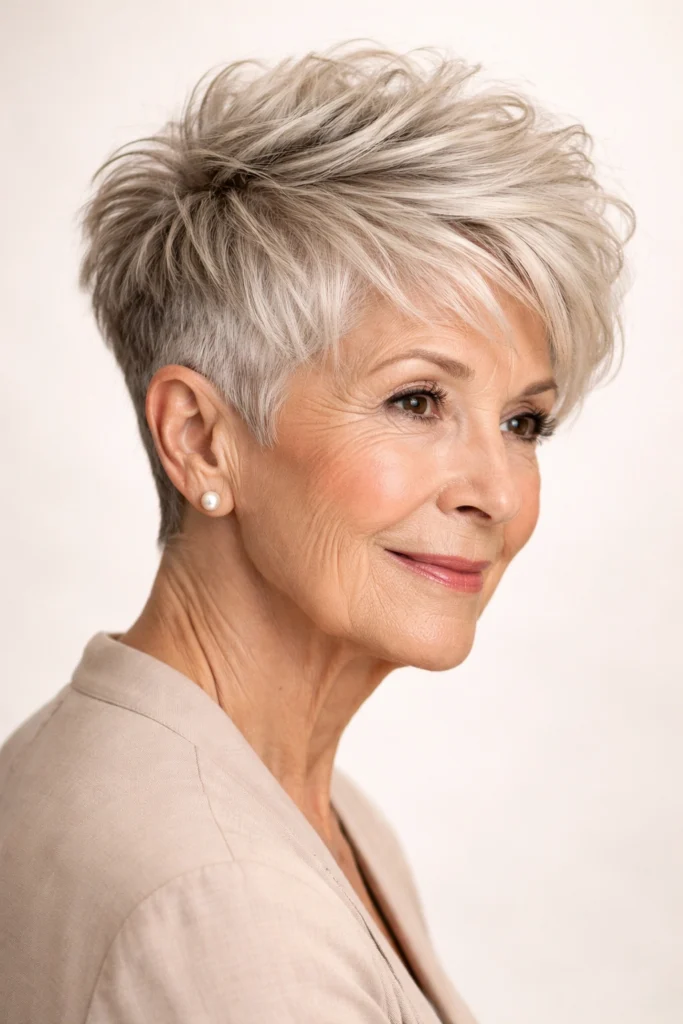
Silver Layered Pixie with Piecey Texture
Courtesy of: hairtical.com
This silver pixie keeps the top long enough to piece apart while the sides stay close, so the whole cut reads soft rather than severe. The texture comes from internal layering and point-cut ends, which lets fine or medium-density hair sit up instead of lying flat against the head. It flatters oval, heart, and long faces especially well, since the height on top balances a longer face and the open sides keep a heart-shaped face from looking top-heavy. A companion piece, Flattering Spring Haircuts 2026 for Chubby Faces Modern Cuts That Define, explores the same palette.
Ask your stylist for a pixie with length through the crown and texture cut into the ends rather than razored off. Daily styling is minimal: a dab of lightweight paste worked through dry hair, pushed in the direction you like. Plan a trim every four to five weeks — pixies lose their shape fast, and this one depends on that contrast between the longer top and the tapered sides. If you’d rather stretch appointments to eight weeks, this is not the cut for you; a longer pixie-bob would be the better compromise.
Soft White Feathered Chin Bob
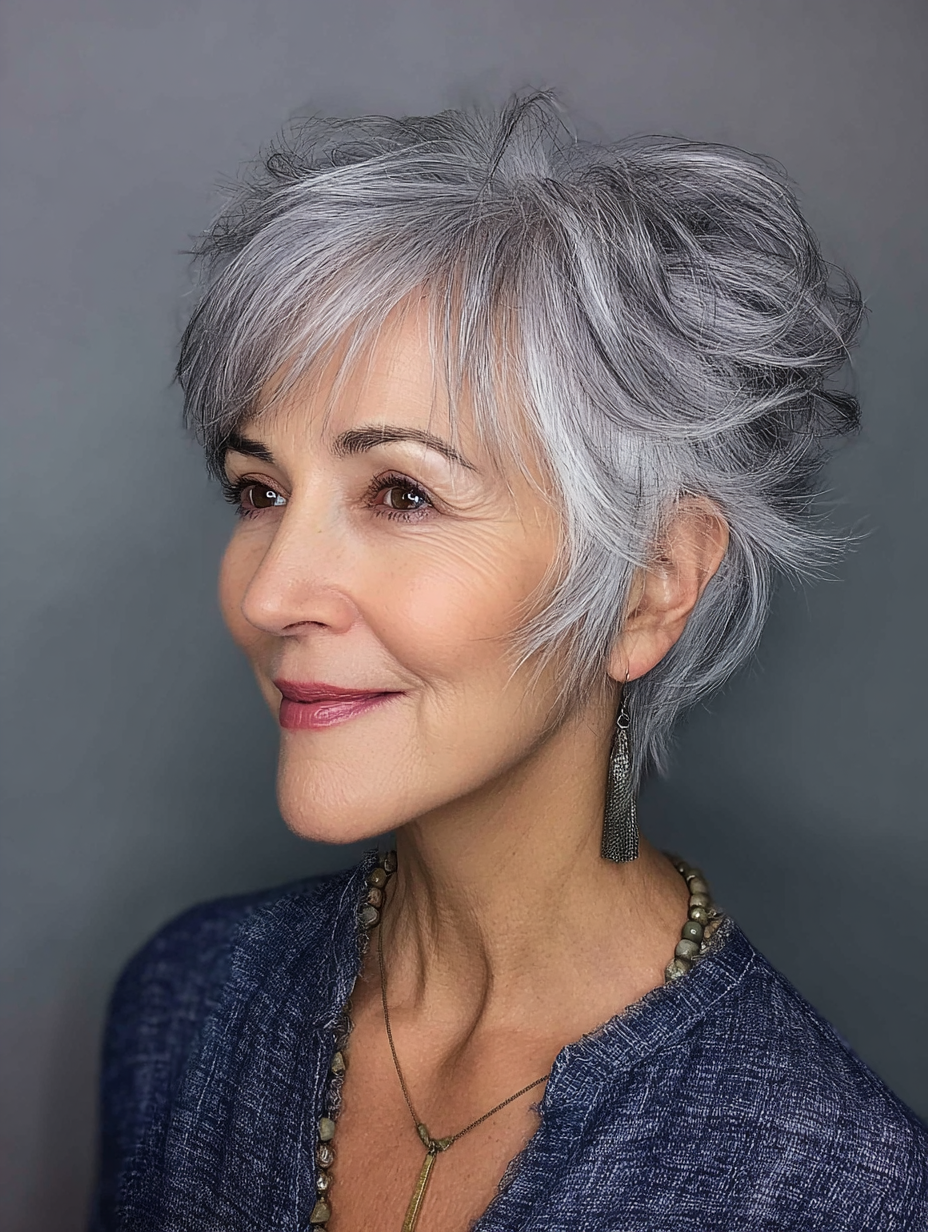
Photo credit: samhairstyles.com
The feathered chin bob is the gentle version of the classic bob: the ends are thinned and flipped so the perimeter looks soft instead of blunt, and the white base makes the feathering read almost luminous. Length sits right at the chin, which frames the jawline without adding width at the cheeks — a good choice for round or square faces. Fine hair takes to this cut well because the feathering removes just enough bulk for the ends to move.
Request “feathered ends, chin length, soft layers through the back” and bring a photo, since “feathered” means different things to different stylists. Blow-dry with a round brush, flipping the ends under, or let it air-dry and tuck one side behind the ear for a more casual look. Trims every six to seven weeks keep the feathering from turning ragged. The trade-off is honest: white hair at this length shows dryness at the ends first, so a regular gloss or deep-conditioning treatment is worth budgeting for.
Ash Gray Pixie with Long Top and Tapered Sides
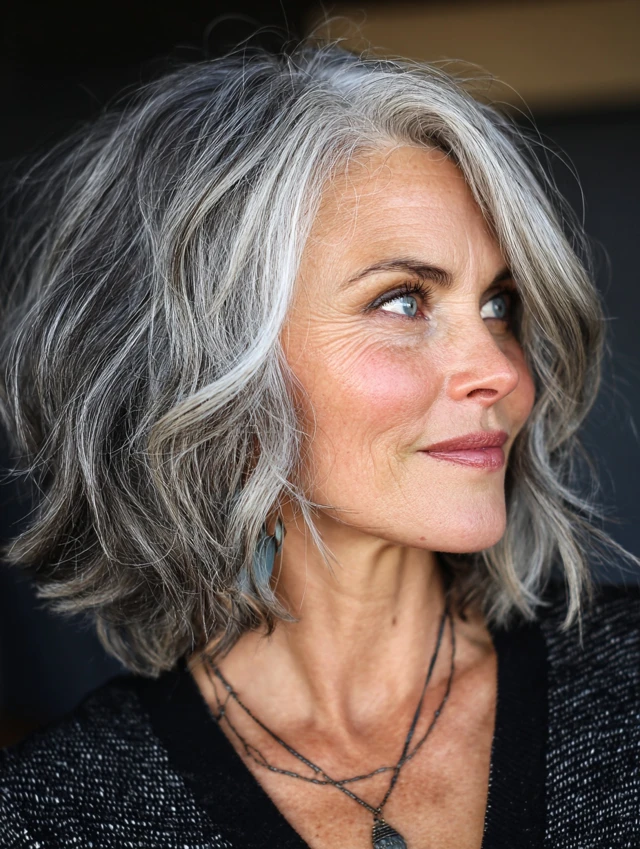
Image credit: forhairstylesinspo.com
Keeping the top long while tapering the sides gives this pixie a modern, androgynous edge without going full undercut. The ash gray tone is cooler and slightly deeper than silver, which adds contrast against the skin and keeps the cut from washing out pale complexions. The long top can be swept forward, to the side, or pushed back — one cut, three moods — and it suits fine to medium hair that has at least some natural body.
This is a barber-influenced cut, so ask for clipper-tapered sides with scissor length left on top, and specify how short you’re willing to go at the nape. Styling takes two minutes with a matte paste; the long top needs only to be directed, not sculpted. Upkeep is the catch: the taper grows out in about three weeks, so budget for a tidy-up every four weeks or learn to love the grown-out version, which is softer and perfectly wearable. Women who dislike frequent salon visits may prefer the longer pixie in idea 1’s family instead.
Salt-and-Pepper Bob with Inward Curve

Source: walkingtowardslove.com
Here the natural salt-and-pepper pattern does the coloring work for you: the darker strands underneath and lighter ones on top create built-in dimension that no single-process color can quite match. The cut lands between chin and shoulder, with the ends curved inward to hug the jawline — a line that flatters long and oval faces and gives fine hair the illusion of density at the perimeter. No bangs, center or off-center part, and the texture stays smooth with a soft bend. The concept gets a fuller treatment in Winter Haircuts.
Ask for a one-length bob with the ends beveled under, cut at low elevation so the perimeter stays full. A round brush and a smoothing cream give you the inward curve; on second and third days, a flat iron pass on the ends refreshes it. Trims every seven to eight weeks are enough, since the grow-out is graceful. The main trade-off: if your natural gray pattern is uneven or patchy, this cut will show it — in that case, ask about a demi-permanent blend to even the canvas.
Ash-Gray Wave Lob at the Collarbone
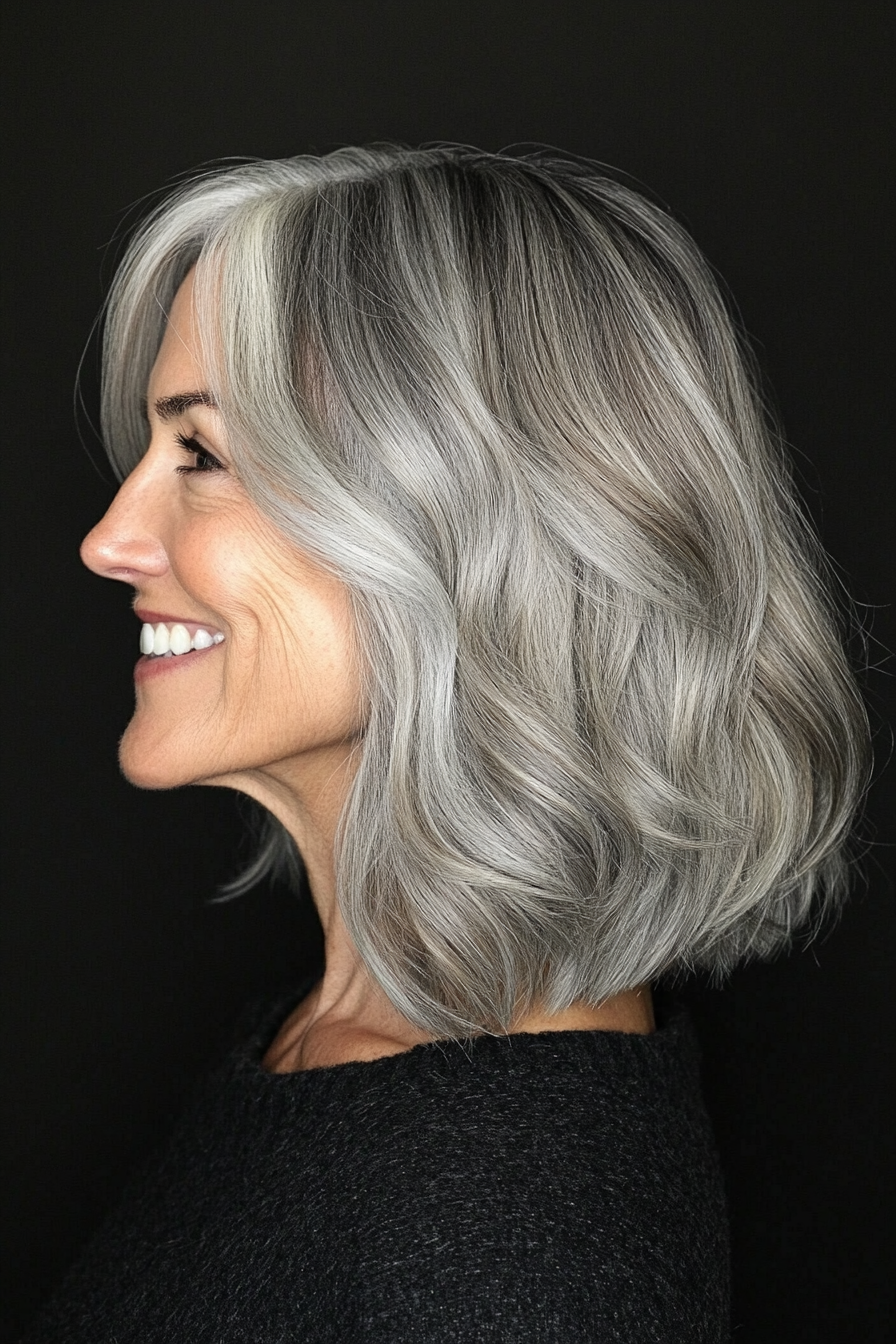
The lob — long bob — at collarbone length is the most forgiving cut on this list. It is long enough to pull back on bad-hair days, short enough to dry quickly, and the ash-gray tone with subtle wave gives it movement without any single feature shouting. The waves here are loose and irregular, the kind that come from a large-barrel iron or from braiding damp hair overnight. It works for most face shapes because the length draws the eye downward, elongating a round face, while the waves add width where a long face needs it.
Ask for a collarbone-length cut with long layers starting at the chin and a lived-in, beveled hem. For the waves, alternate the direction of each curl section so they don’t merge into ringlets. This is genuinely low-maintenance: trims every eight to ten weeks, and the grow-out blends seamlessly. The honest downside is that ash tones can fade brassy in hard water or strong sun — a blue or purple shampoo every other week keeps the ash cool through winter.
Short White Choppy Crop with Wispy Fringe
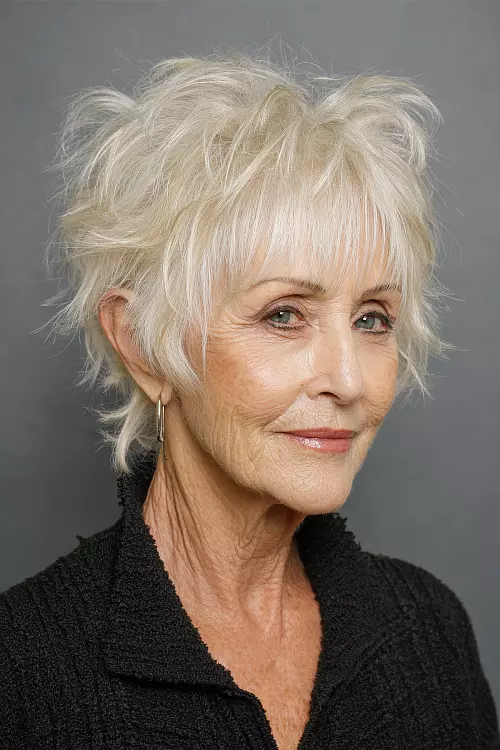
Courtesy of: fabbon.com
The choppy crop is for anyone who wants to wash, ruffle, and go. The layers are cut uneven on purpose — short, jagged pieces throughout that create texture whether the hair is thick or fine — and the wispy fringe keeps the forehead from looking heavy. On white hair, the choppiness catches light at every angle, which is why this cut photographs so well despite being the simplest here. It suits oval and heart faces, and it’s one of the few short cuts that doesn’t demand precision to look intentional.
Tell your stylist you want a “choppy, piecey crop with a wispy fringe, cut to enhance texture” — and mean it, because this cut only works if the stylist commits to the unevenness. A tiny amount of texturizing cream on dry hair is the entire routine. Trims every five to six weeks keep the fringe out of your eyes and the layers from merging into one mass. The trade-off is styling range: what you see is what you get, and there isn’t enough length to change it up for an event.
White-Blonde Tousled Pixie
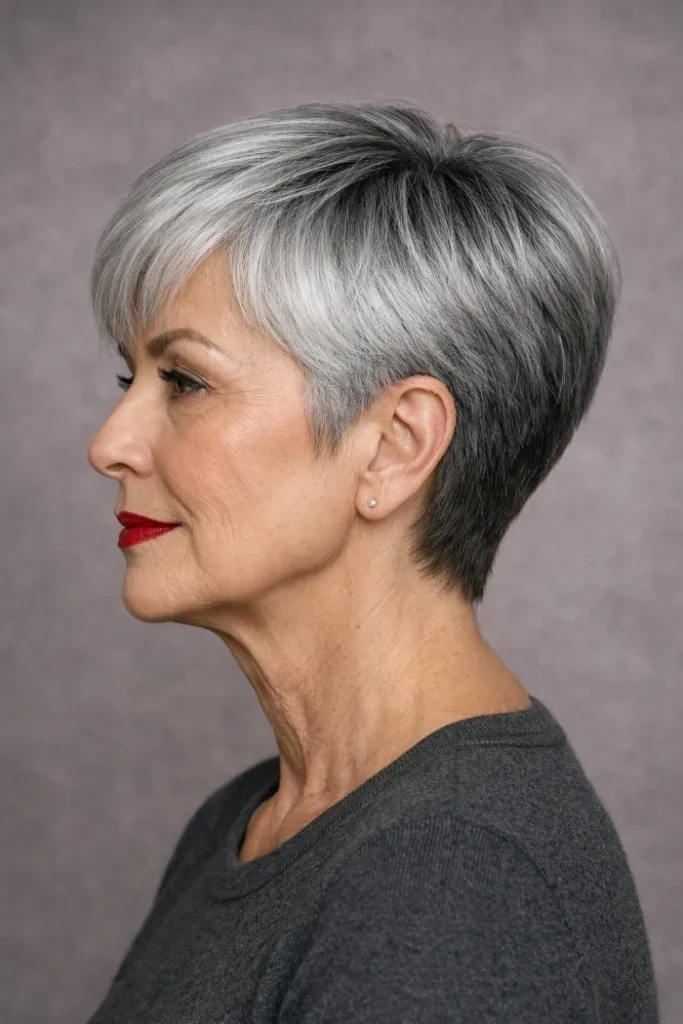
Photo credit: glownstylish.com
White-blonde is the brightest tone on this list — nearly platinum, with just enough warmth to keep it from reading icy. On a tousled pixie, that brightness acts like a built-in highlight: every separated piece reflects light, so fine hair looks fuller than it is. The tousled finish means the cut is styled by scrunching rather than smoothing, which is a gift for anyone whose hair has natural wave or cowlicks that fight precision styles. Related reading: Winter Blonde Hair Color Ideas takes the same concept further.
Ask for a pixie with texture cut throughout and enough length on top to tousle — roughly two to three inches. If your hair is naturally white, achieving this tone may need only a gloss; if you’re covering darker regrowth, expect a root touch-up every four to six weeks, which is the real maintenance cost here. Style with a volumizing mousse on damp hair, then scrunch dry with your fingers. Women who want a softer grow-out might prefer the silver tones in ideas 1 or 15, which blend with regrowth more forgivingly.
Rounded Gray Bob with Silver Gloss
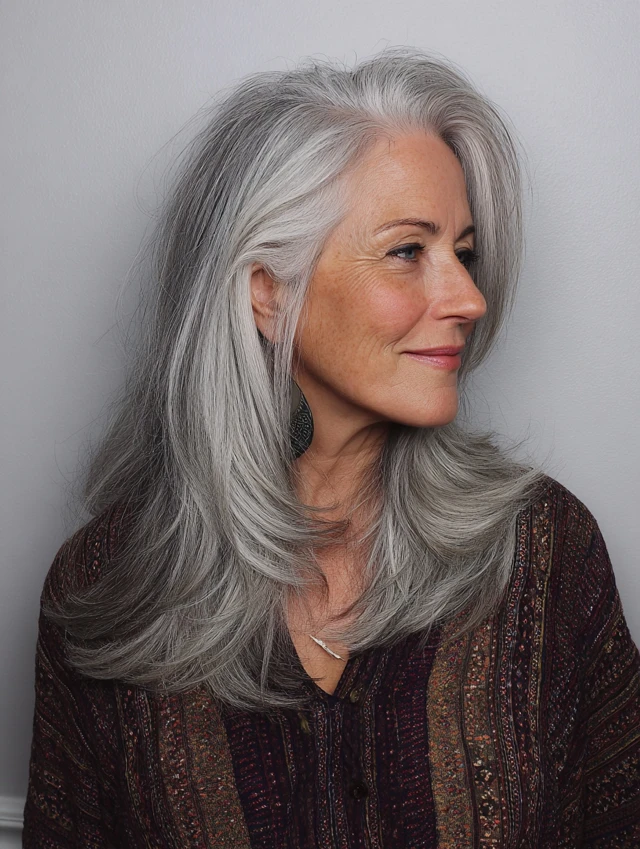
Image credit: outfitarea.com
The rounded bob is cut to follow the curve of the head, full at the crown and tapering to a soft perimeter at the jaw — the silhouette that made the bob famous, rendered in gray. A clear or silver gloss over the top is what gives it that liquid shine; gray hair can look matte and dry without it, and the gloss treatment makes the color read expensive. This is a polished, put-together cut that suits professional settings and formal occasions, and it flatters square and round faces by softening the angles.
Request a rounded, graduated bob with stacked layers at the nape for the curved shape, and ask about a demi-permanent clear gloss to add shine — it lasts about four to six weeks. Blow-dry smooth with a paddle brush, then finish with a shine serum on the ends only. Trims every six weeks keep the graduation crisp; let it grow too long and the round shape collapses into a triangle. If you prefer wash-and-go ease, the tousled cuts elsewhere on this list will serve you better.
Long Silver Layers with Face-Framing Pieces

Source: forhairstylesinspo.com
Keeping length past the shoulders after 70 is a deliberate choice, and it works best when the cut is doing structural work: long layers to remove weight, and face-framing pieces starting at the cheekbone to keep the length from dragging the face down. In silver, long hair can look striking rather than straggly, provided the ends are healthy — split ends are far more visible on light hair. This suits thick or coarse hair best; very fine hair at this length tends to look thin at the ends no matter the cut.
Ask for long layers with the shortest face-framing pieces at cheekbone length, and be honest with your stylist about how much length you’re willing to sacrifice for healthy ends — a blunt, clean hem reads far better than an extra two inches of frayed ends. A purple conditioner once a week keeps silver bright along the lengths. Trims every eight to ten weeks. The trade-off is time: long hair takes longer to wash, dry, and detangle, and in winter it tangles in scarves and coat collars more than any bob would.
Gray Bixie with Side-Swept Bangs
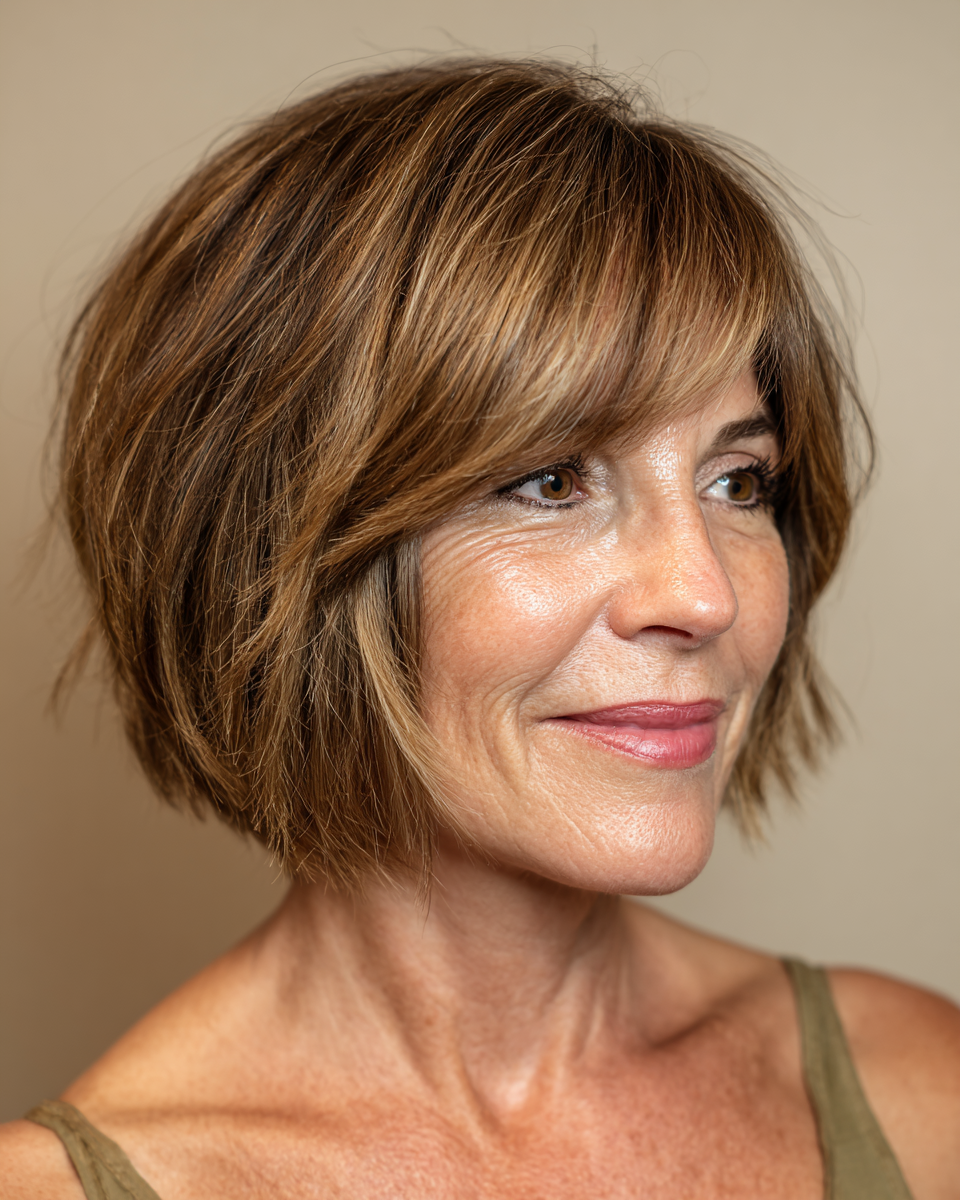
The bixie — the love child of a bob and a pixie — sits at that in-between length where the back is short and neat but the top and front have enough length to sweep. Side-swept bangs are doing quiet work here: they soften a high forehead, disguise thinning at the temples, and give the whole cut a direction. In gray, the bixie reads modern and a little bit chic, and it suits fine to medium hair that needs the illusion of fullness around the face. If this look speaks to you, Best Cozy Hair Colors for October 2025 continues the thread.
Ask for a pixie-bob hybrid: tapered nape, length through the crown and fringe, bangs swept to your preferred side. Style by blow-drying the fringe across the forehead with a small round brush, then tucking or pinning if you want it off your face later. Trims every five to six weeks — the bixie loses its identity fast as the back grows. If you’re growing out a pixie, this is actually a useful transitional cut; if you want minimal salon time, look at the longer bobs instead.
Chin Bob with Ash-Brown Lowlights
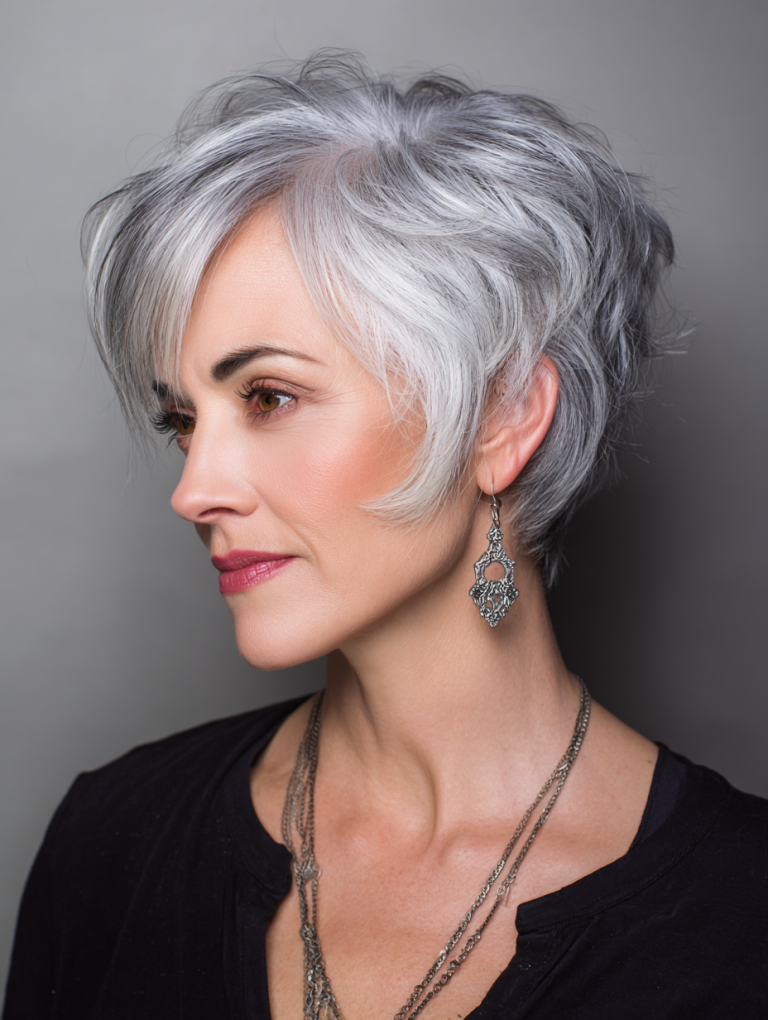
Courtesy of: stylescrave.com
Not everyone wants to go fully silver, and the ash-brown lowlight approach is the middle path: your gray stays as the base, and soft brown pieces are woven through to add depth and shadow. The chin-length bob keeps the shape crisp, and the lowlights make fine hair look denser because the eye reads the darker pieces as fullness. It’s a particularly good option during the grow-out phase, when the demarcation line between dyed hair and natural gray needs camouflaging.
Ask for demi-permanent ash-brown lowlights — demi is key, because it fades gradually instead of leaving a hard line — placed mostly underneath and through the mid-lengths. A chin bob with a beveled-under perimeter keeps the ends looking thick. The lowlights need refreshing every eight to twelve weeks, which is gentler than a full root schedule. Trade-off: brown lowlights on gray hair can go warm or muddy if the wrong level is chosen, so ask your colorist to stay in the ash family and show you a swatch first.
Tapered Pixie with Crown Volume
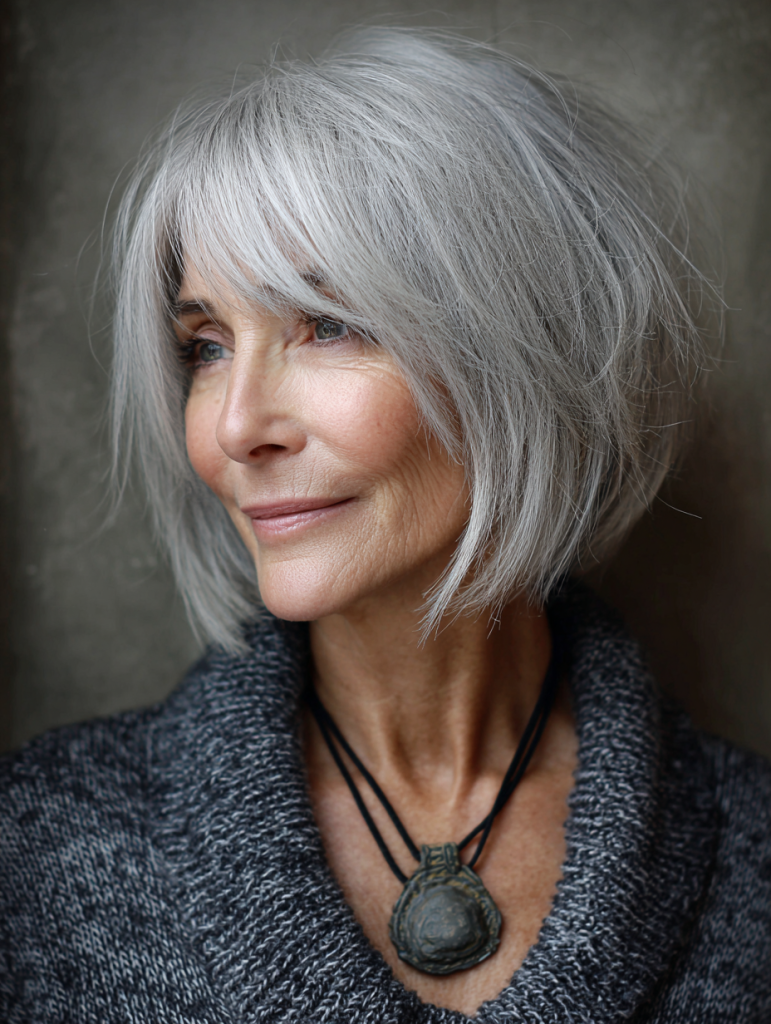
Photo credit: hairandtattoo.com
This pixie is engineered for lift: the sides and nape are tapered close while the crown is left long and layered, so the eye goes up, not out. That vertical emphasis is flattering for round faces and for anyone whose hair has started to lie flatter with age. The gray tone throughout keeps it soft — a dark pixie this short can read severe, but gray turns the same shape elegant.
Ask for a tapered pixie with “weight left at the crown” and texture through the top. Style with a root-lifting mousse on damp hair, blow-dried upward with your fingers or a small round brush. A light-hold spray keeps the crown from collapsing by afternoon. Trims every four to five weeks are non-negotiable; the taper is the whole architecture. If your hair is very coarse or curly, this cut can puff at the crown instead of lifting — in that case, ask the stylist to thin the interior rather than layer it.
Silver Shag at the Collarbone
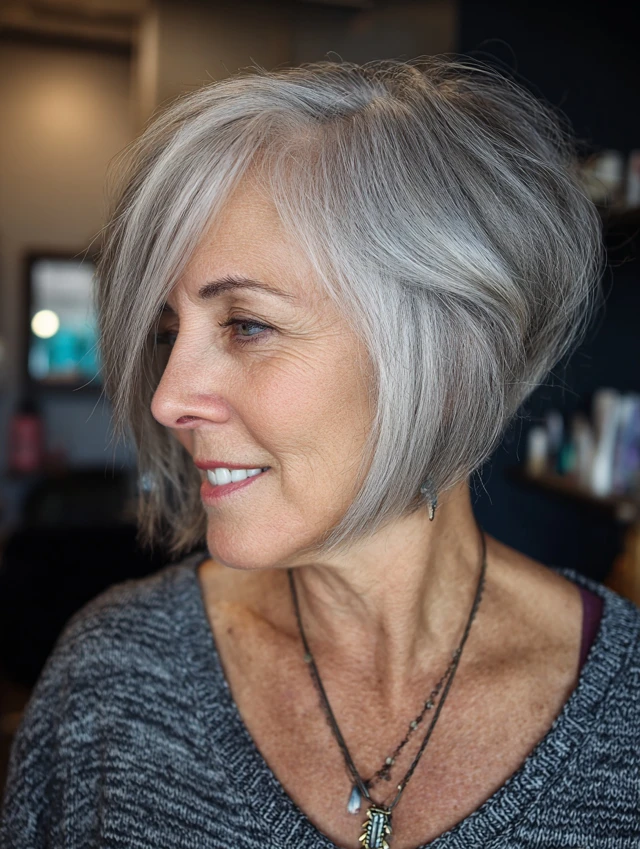
Image credit: fitsbydee.com
The shag is the anti-bob: instead of a clean perimeter, you get choppy layers of different lengths, a textured fringe, and ends that flip wherever they please. At collarbone length in silver, it’s the most youthful-feeling cut on this list without trying to look young — the messiness is the point, and it hides a multitude of sins, from thinning crowns to awkward grow-out. Thick, wavy, or coarse hair takes to the shag best, since the layers have something to work with. For the fuller picture, Short Summer Haircuts 2026 is worth your time.
Ask for a shag with heavy layering, a fringe that blends into the face-framing pieces, and texturized ends. Style with a salt spray or curl cream scrunched into damp hair, then air-dry — the less you fuss, the better it looks. Trims every seven to eight weeks to keep the layers distinct. The honest trade-off: on very fine, straight hair, a shag can look thin and stringy rather than artfully undone, so fine-haired women should ask for fewer, blunter layers or consider the tousled bob in idea 19 instead.
Classic Wedge Bob in Soft Gray
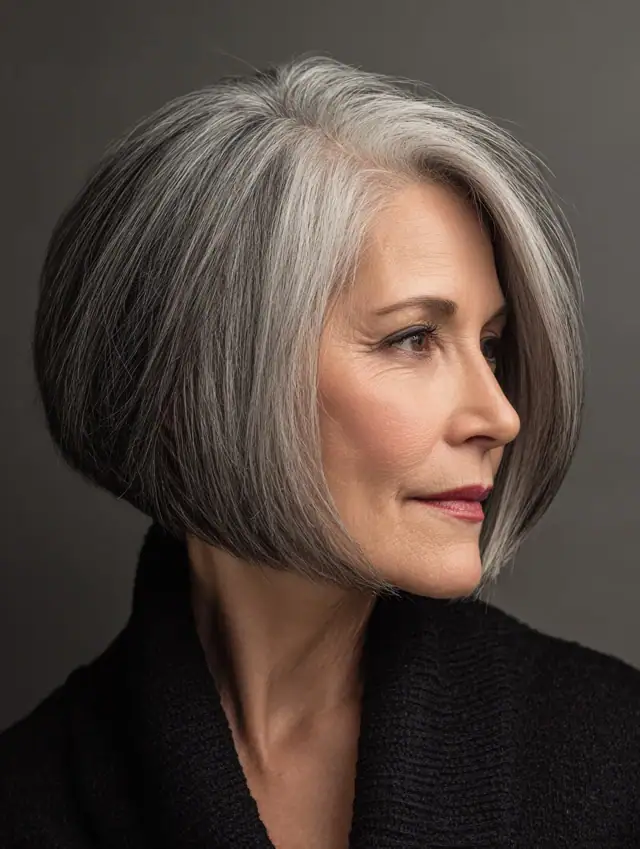
Source: divainspo.com
The wedge is a precision cut — stacked layers at the nape that build volume and angle down to a longer front — and in soft gray it reads timeless rather than dated. It’s one of the best architectural solutions for fine hair, because the stacking creates fullness at the back of the head where fine hair typically falls flat. The angled front pieces slim a round face and give the cut its signature swing when you turn your head.
This is a technical cut, so find a stylist confident with graduation; ask for a “stacked wedge with a soft, textured front.” Blow-dry the back upward with a round brush to activate the stack, and smooth the front pieces down. Trims every five to six weeks — the wedge’s geometry disappears quickly as it grows. It’s not a wash-and-go cut, but for anyone who loves a structured, salon-finished look every day, the daily ten minutes are worth it.
Steel-Gray Textured Pixie with Highlights
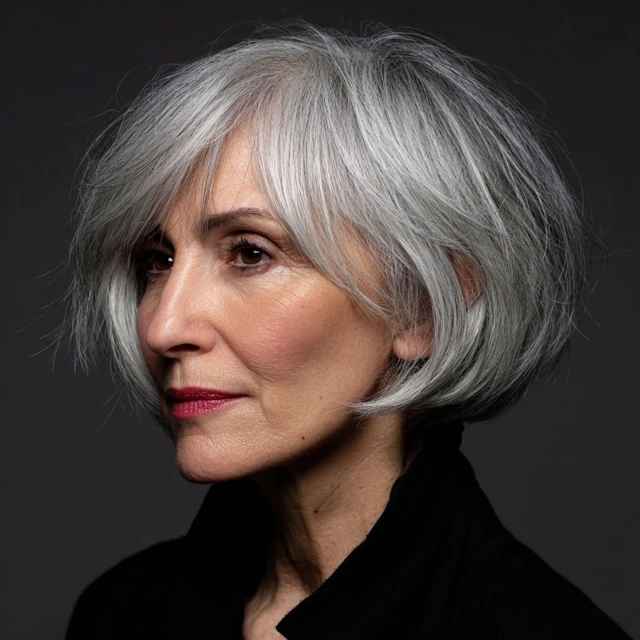
Steel gray sits between silver and charcoal — deeper and moodier than white, lighter than a true dark gray — and fine highlights woven through a textured pixie keep it from looking flat or heavy. The texture does the styling for you: piecey, separated bits that catch light differently across the head. It’s a strong choice for women with some natural wave or cowlicks, since the cut works with movement instead of fighting it, and it suits oval and oblong faces.
Ask for a textured pixie with “dimension through the top” — highlights or lowlights placed to emphasize the piecey ends. If your gray is naturally steel-toned, you may need no color at all; if not, a demi-permanent gloss in a steel shade every six to eight weeks maintains the tone. Style with a pea-sized amount of wax, pinching the ends. Trims every four to five weeks. The darker tone means regrowth shows more obviously than on white hair, so this suits women comfortable with a regular color appointment.
Chin Bob with Curtain Bangs in Silver
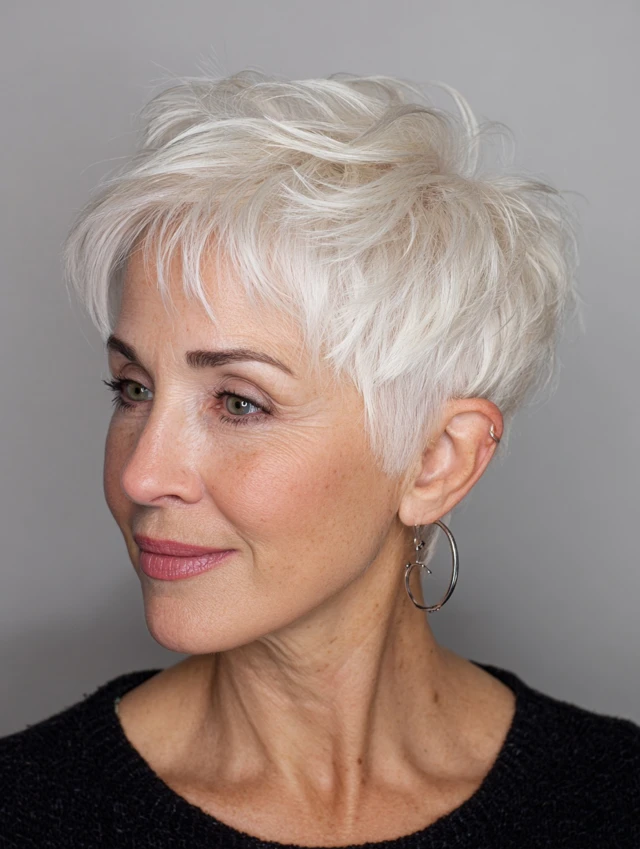
Courtesy of: fitsbydee.com
Curtain bangs — parted in the middle and sweeping to each side — are the most forgiving fringe for mature faces: they soften the forehead, frame the cheekbones, and unlike a straight-across bang, they don’t demand trimming every three weeks. Paired with a chin-length silver bob, they give the classic cut a current feel. The parted fringe also works well with glasses, since it doesn’t compete with frames the way a full bang can. For more ideas in the same lane, see our Must Try Haircuts Style for 2026 From Modern Butterfly to Elegant Bobs Long Layers.
Ask for curtain bangs cut to cheekbone length, blending into the bob’s face-framing layers. Blow-dry the fringe with a round brush, rolling each side away from the face — thirty seconds per side is genuinely enough. The bangs will need a light trim every four to five weeks, but the bob itself can go six to eight. If your hair is very curly, curtain bangs can shrink up unpredictably; ask the stylist to cut them dry or leave extra length.
Frosty White Cropped Pixie
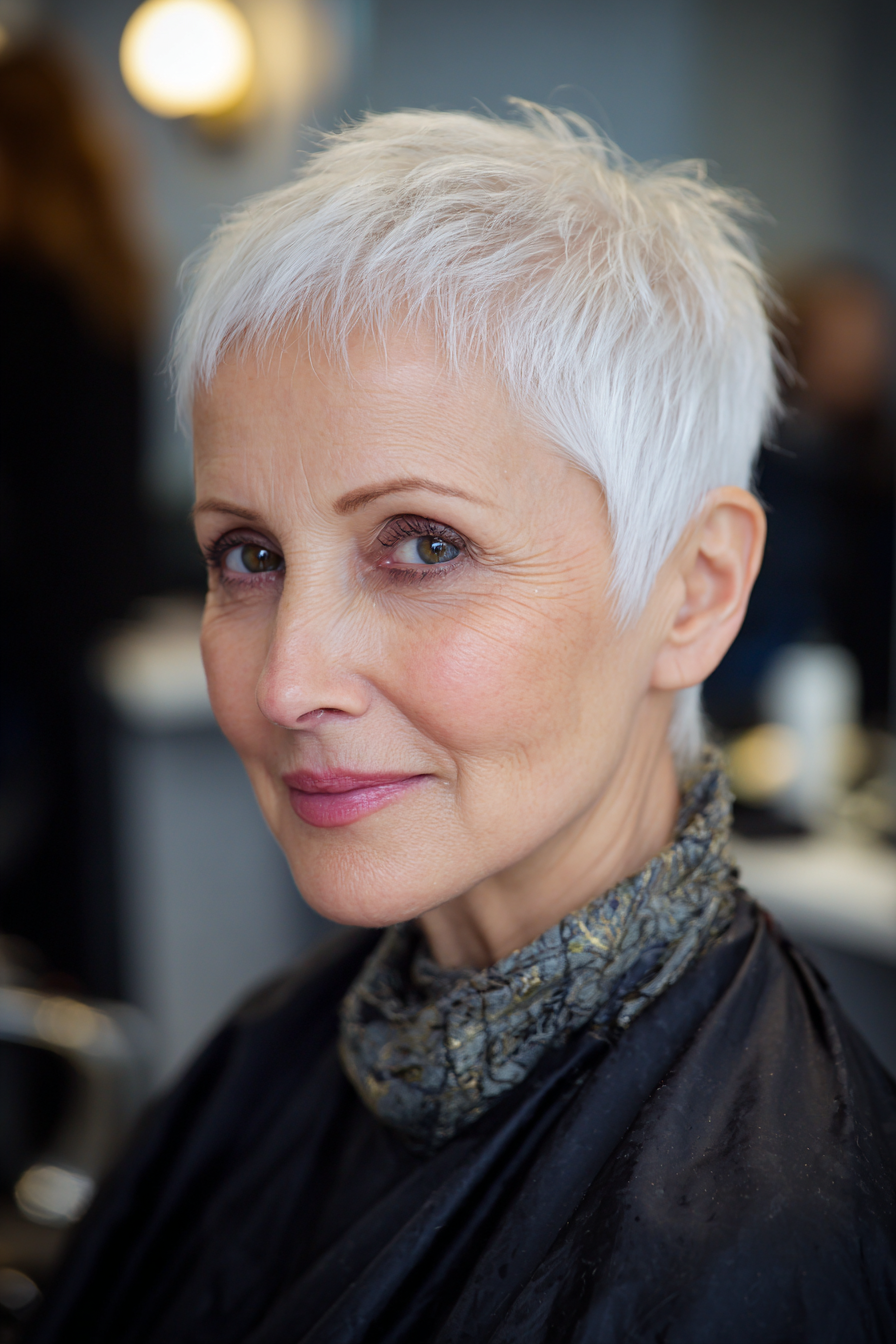
Photo credit: creativebooster.net
The frosty white crop is the boldest cut here: very short all over, with a clean, almost sculptural finish that puts the face and the hair color front and center. Icy white hair at this length looks intentional and striking — there’s nowhere for dullness or damage to hide, which is exactly why it works when the hair is healthy. It suits strong bone structure and oval faces, and it’s the ultimate wash-and-go: shampoo, towel-dry, done.
Ask for a “cropped pixie, short all over with soft edges at the hairline” — and be clear about how short, since a quarter inch of misunderstanding matters at this length. White hair needs protection from yellowing: a purple shampoo weekly and minimal heat. Trims every three to four weeks keep the crop crisp; this is the highest-maintenance haircut on the list in terms of salon frequency, even though daily styling is zero. Women who want short hair with more forgiveness between appointments should look at the textured pixies in ideas 1 or 15.
Ash-Brown Layered Bob with Soft, Airy Waves
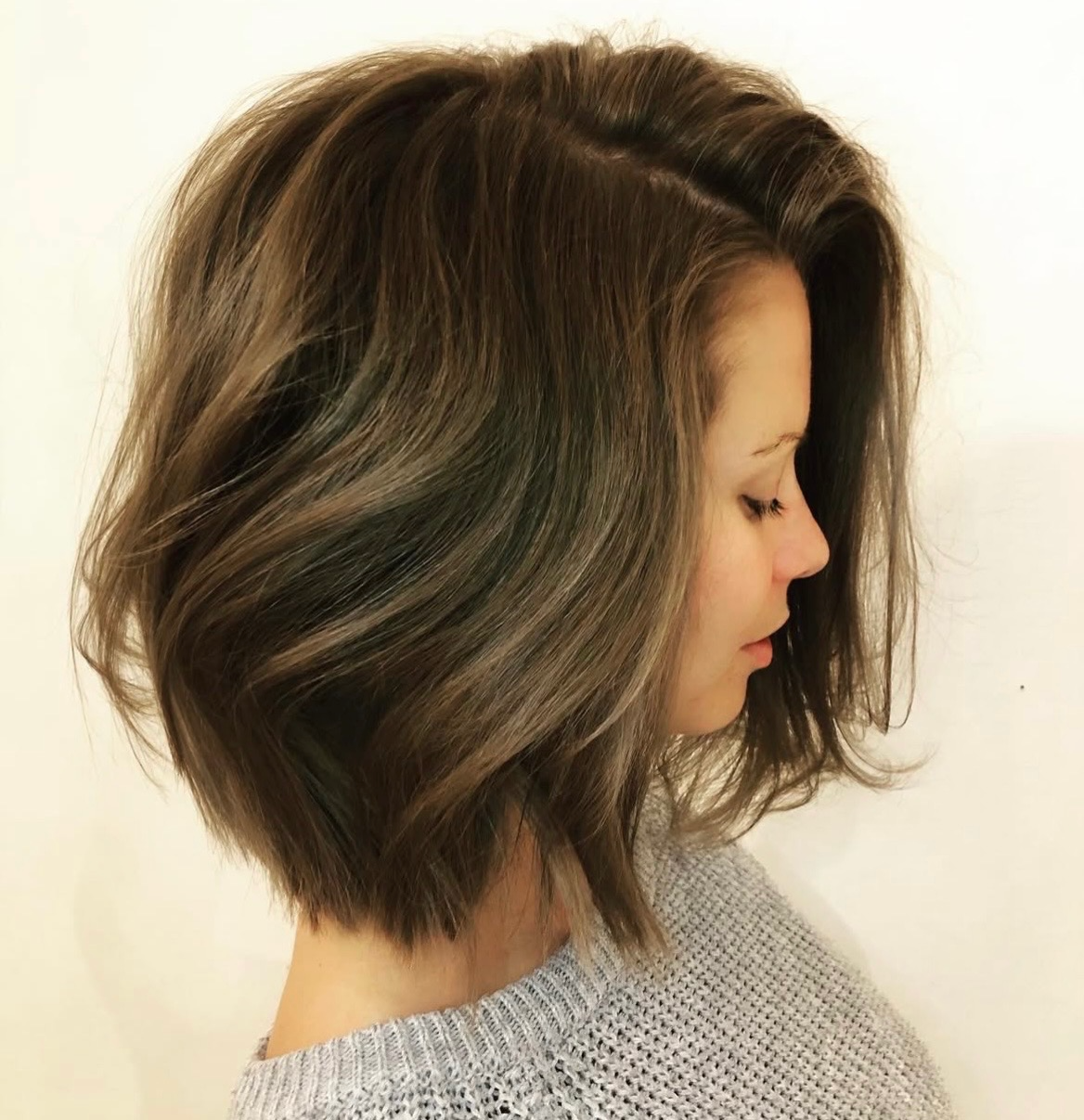
Image credit: shadegbg.se
This is the cut for women who aren’t ready to go gray — or simply prefer not to. The ash-brown base with subtle lighter pieces gives dimension without a harsh root line, and the layered bob with soft, airy waves keeps it feeling light rather than helmet-like. The waves here are loose and brushed-out, more “weekend” than “occasion,” which makes the whole look approachable. It works across face shapes and is kind to medium-density hair.
Ask for a layered bob with soft, invisible layers and an ash-brown base with a few face-framing lighter pieces — specifying “ash” keeps the brown from going warm or brassy. Root touch-ups every five to six weeks if you’re covering gray; the ashy tone may need a toner refresh in between. Style with a large-barrel iron, then brush the waves out for that airy finish. The trade-off is the color commitment: this is the only cut on the list that requires ongoing dye maintenance by design, so it’s best for women who already color and plan to continue.
Silver Tousled Bob with Side-Swept Bangs

Source: stylescrave.com
Some cuts look best the less you do to them, and this tousled silver bob is the prime example. The layers are cut to encourage natural movement, the side-swept bangs fall where they fall, and the silver tone does the visual heavy lifting — texture plus light color equals the appearance of fullness. It’s a genuinely low-effort cut that still looks deliberate, which is a rare combination, and it suits fine to medium hair with any amount of natural wave. For readers who want more, Summer Haircuts for Curly Hair 2026 keeps the ideas coming.
Ask for a “textured bob with tousled layers and a side-swept fringe, cut to air-dry well.” The key phrase is air-dry: a good version of this cut needs nothing more than a scrunch of curl cream or mousse on damp hair. Trims every six to eight weeks. The honest caveat is that “tousled” is doing a lot of work — on very straight, silky hair, the texture may fall out by midday, in which case a light texturizing spray at the roots in the morning solves it.
Pearl-Gray Pixie with Long Fringe
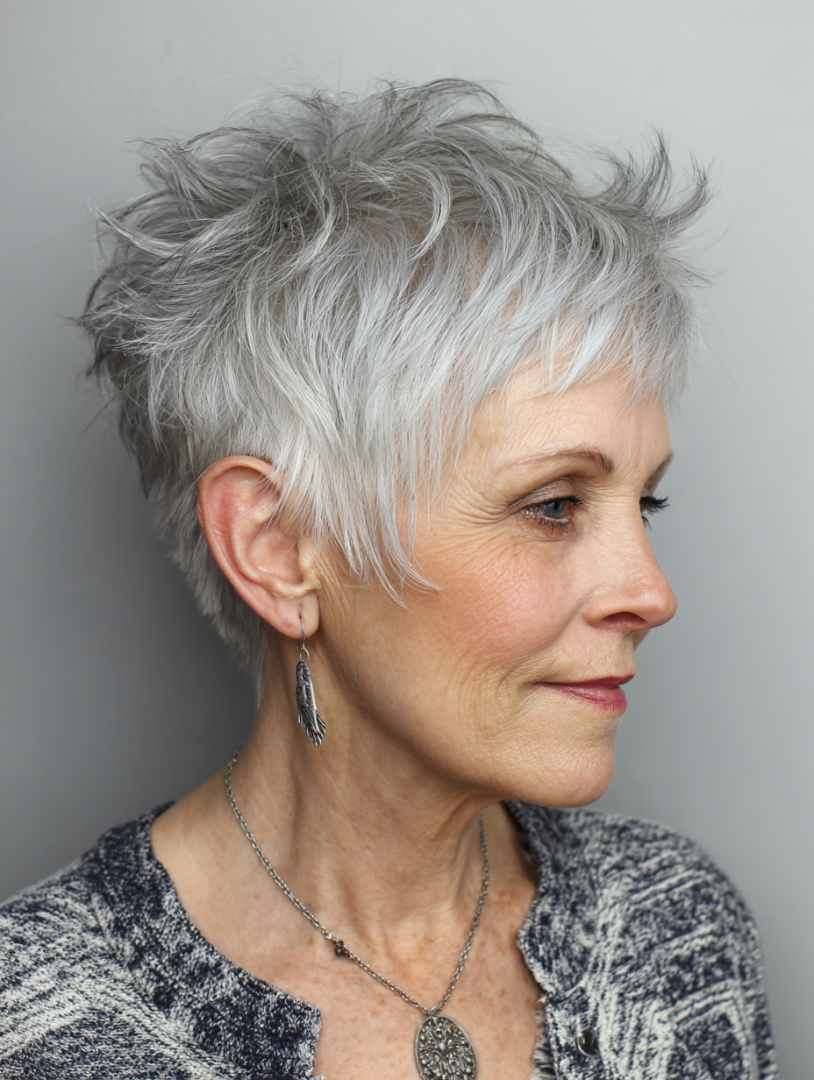
Pearl gray has a soft, almost opalescent quality — lighter than steel, warmer than silver — that flatters warm and neutral skin tones beautifully. Paired with a pixie that keeps the fringe long, you get a cut with real styling range: sweep the fringe across for polish, push it back for edge, or let it fall forward for softness. The longer fringe also does practical work, covering thinning at the hairline or softening forehead lines.
Ask for a pixie with “length kept in the fringe, tapered at the sides and nape.” Blow-dry the fringe in the direction you want it to sit — hair has memory, and thirty seconds of directed heat sets it for the day. Trims every four to five weeks, with the fringe possibly needing a tidy-up between appointments. If your natural gray leans yellow rather than pearly, a weekly purple shampoo or a sheer pearl gloss will nudge it toward this tone.
Blunt Chin Bob in Slate Gray
Courtesy of: womenshairtoday.com
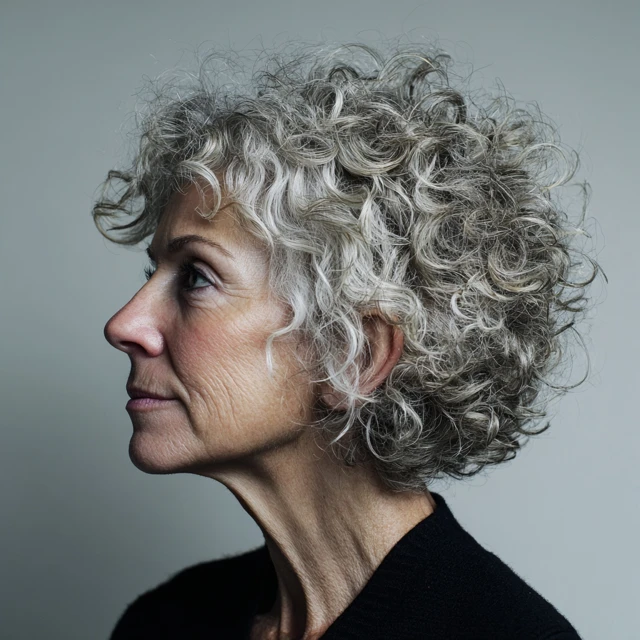
The blunt bob is the minimalist of the bob family: one clean line at the chin, no layers, no fuss. In slate gray — a deeper, blue-toned gray — it looks sharp and contemporary, and the solid perimeter makes fine hair appear thicker than any layered cut can. It’s a strong choice for straight hair and for oval or long faces, where the horizontal line adds welcome width. There’s no hiding behind texture here, so the cut lives or dies on precision.
Ask for a “one-length blunt bob at the chin, no layers,” and find a stylist who cuts dry or cross-checks carefully — blunt cuts show every inconsistency. Style by blow-drying smooth with a paddle brush; the line is the whole look. Trims every five to six weeks to keep the perimeter crisp. The trade-off is versatility: without layers, there’s one way to wear it, and curly or very wavy hair will fight the blunt line daily. Straight-haired minimalists, this is your cut.
Short White Crop with Natural Curls
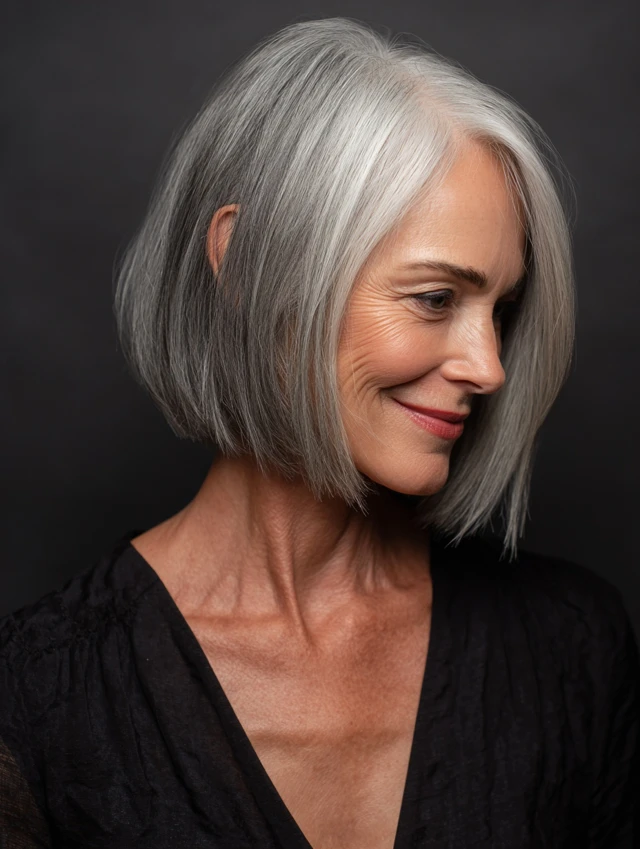
Photo credit: yourstyleinspo.com
If you have natural curl or strong wave, a short white crop lets your texture be the style. The curl creates its own volume and shape, so the cut can stay simple — short all over with just enough length on top for the curl pattern to form. White hair shows curl definition beautifully, each coil catching light, and the short length means wash day takes minutes. This suits round and heart faces especially, since the height and texture balance softer features. Our Best Old Money Short Hairstyles rounds up more takes on this exact idea.
Ask for a “short crop cut to enhance natural curl, with length left where the curl forms best” — and if possible, have it cut dry or by a stylist experienced with curly hair, since curls spring up shorter than they appear wet. Style with a curl cream on soaking-wet hair, then diffuse or air-dry without touching. Trims every six to eight weeks; curly crops grow out more gracefully than straight pixies. The main consideration is dryness: curly white hair is doubly prone to it, so a rich conditioner and occasional deep treatment are worth the effort.
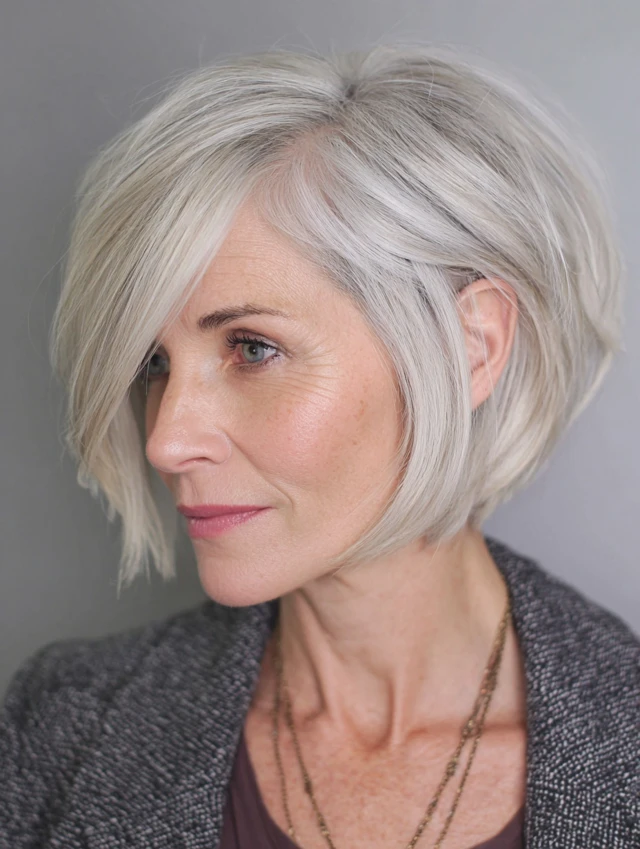
Gray Bob with Deep Side Part and Sleek Finish
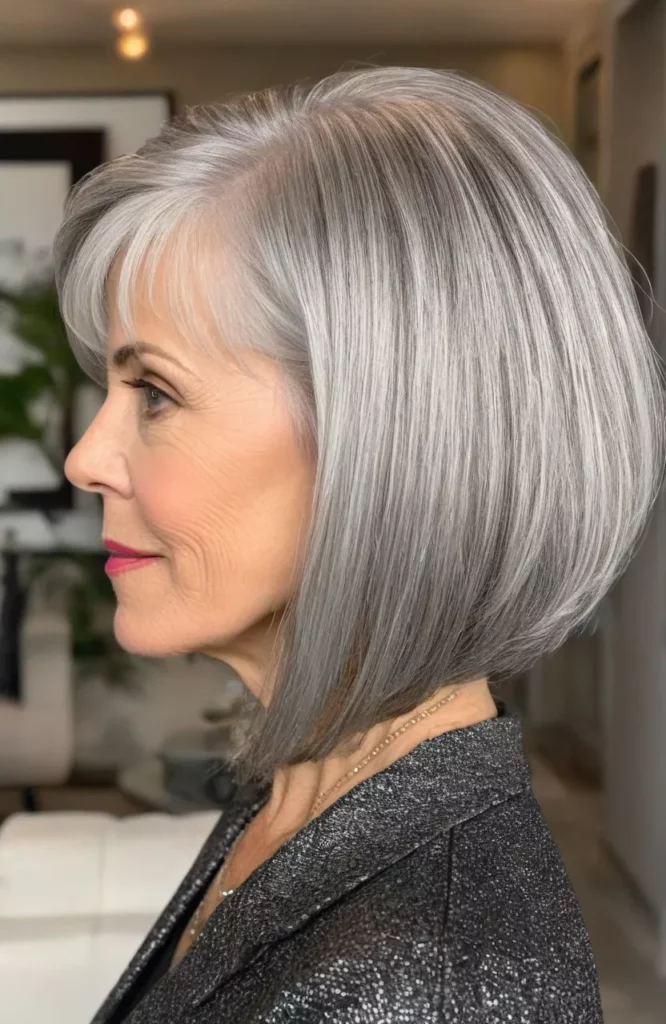
Image credit: hairprimo.com
A deep side part is the fastest way to add drama to a simple bob: it creates asymmetry, volume at the crown, and a long sweep of fringe in a single move. With a sleek, polished finish in gray, the result is elegant without being stiff — the kind of cut that works for a wedding as well as a Tuesday. The side part also cleverly disguises thinning at the part line, a common concern, by simply moving the part somewhere fuller.
Ask for a chin-to-jaw bob with minimal layering and tell your stylist you part it deeply on one side, so the cut is balanced for that part. Blow-dry smooth with a paddle brush, directing the roots up and over for volume, and finish with a light serum. Trims every six weeks. The sleek finish shows every bit of frizz and flyaway, so this is a fair-weather friend of winter static — keep an anti-frizz serum handy, and on the worst static days, a low textured bun is a fine backup plan.
Icy Platinum Stacked Bob with Face-Framing Layers
Source: cleodiva.com
The stacked bob builds its volume at the back — graduated layers that lift the crown — while the front stays longer to frame the face, and in icy platinum the whole architecture glows. The face-framing front pieces soften the precision of the stack, so the cut reads polished but not severe. It’s an excellent choice for fine hair, since the stacking manufactures fullness where nature didn’t, and the light color keeps the stacked back from looking heavy or dark.
Ask for a “stacked bob with graduation at the nape and longer face-framing pieces in front.” The stack needs a round brush and an upward blow-dry to show its shape; without it, the back can fall flat. Trims every five to six weeks to maintain the graduation. Platinum this bright needs tone maintenance — a purple shampoo weekly — and the stacked shape grows out into a wedge-ish silhouette that’s still wearable, so you’re never caught with an awkward in-between phase.
Final Thoughts
The strongest cuts on this list work because of shape, dimension, and honest maintenance math — not because they’re short or long, silver or brown. A textured pixie earns its place if you’re happy seeing your stylist monthly; a collarbone lob earns its place if you’re not. Before you book, be realistic about three things: how often you’ll sit in the chair, how much time you’ll spend with a dryer each morning, and whether your hair’s natural texture is an ally or an adversary for the cut you love. Choose the cut whose upkeep matches your actual life, and winter will be the season your hair looks its best — not the season it gives up.
- Trim every six to eight weeks to keep the shape sharp.
- Use a heat protectant before every hot-tool session.
- Tone blonde or highlighted hair every six weeks to keep brassiness away.
- Match the upkeep schedule to your routine before committing to high-maintenance color.
The best color is the one that still looks intentional at week six.